10 Copper Wire Wrapped Vintage Teacup Bird Feeders

Incorporating vintage tableware into outdoor spaces offers an elegant way to support local wildlife while creating eye-catching garden features. Copper wire wrapped vintage teacup bird feeders combine historical ceramic craftsmanship with functional hand-formed metalwork, providing elevated perches for small songbirds. Readers will learn how to select suitable porcelain pieces, master essential wire-forming techniques, and assemble secure hanging displays step by step. Building elevated feeding platforms protects wild birdseed from ground moisture and keeps forage areas safe from domestic predators. This long-form guide presents ten completely unique DIY design concepts tailored for varied home decor aesthetics, ranging from streamlined minimalist style arrangements to rustic, highly detailed garden installations. Utilizing simple wire manipulation methods allows crafters of all experience levels to complete a satisfying, beginner friendly project that elevates outdoor landscape organization and aesthetic appeal.
Why This Idea Is Trending or Useful
Repurposing vintage teacups into functional outdoor features is a popular concept across modern Pinterest boards because it marries eco-friendly upcycling with classic aesthetic charm. Outdoor enthusiasts frequently search for creative ideas that add personalized detail to patio borders without requiring expensive commercial installations. Copper wire wrapping provides high practical utility, as raw copper naturally withstands outdoor weathering while forming a flexible, sturdy harness that holds delicate ceramics safely without direct drilling. This approach offers strong DIY appeal because it preserves antique china intact, allowing makers to utilize cherished family heirlooms risk-free. The project is exceptionally accessible for beginners, requiring only basic hand tools and minimal material investment. Building custom copper-framed feeders serves as an easy project to enhance backyard birdwatching while introducing warm metallic tones to residential garden displays.
Materials and Preparation
Proper material preparation and thoughtful structural planning ensure a safe craft project that remains durable across changing seasonal weather conditions. Essential materials include vintage porcelain teacups with matching saucers, solid sixteen-gauge and twenty-gauge raw copper wire, decorative glass or metallic beads, and weather-resistant hanging S-hooks. Necessary tools comprise round-nose pliers, chain-nose pliers, heavy-duty wire cutters, protective work gloves, and a soft measuring tape. Before beginning assembly, thoroughly wash all vintage ceramics in warm soapy water to remove surface dust and oils, drying them completely. Measure the outer circumference and height of both the cup and saucer to determine exact wire cut lengths before bending. Planning uniform wire spacing around the ceramic base ensures balanced weight distribution when the completed handmade feeder is suspended outdoors.
Spiral Base Basket with Twisted Handle Suspender
How to Create
Construct a solid support basket by coiling a six-foot length of sixteen-gauge copper wire into a flat three-inch spiral using round-nose pliers. Place the center base of a vintage porcelain saucer directly onto this copper spiral to establish a level foundation. Extend four equal wire strands outward from the spiral base, bending them upward at ninety-degree angles along the outer edge of the saucer. Set the matching teacup upright inside the saucer, continuing the four copper strands upward along the outer walls of the cup. Twist pairs of adjacent wire strands together tightly two inches above the cup rim, merging them into a sturdy two-strand twisted loop for hanging. Secure small clear glass beads along the vertical wire ribs to catch morning sunlight. This practical execution method creates a secure, cradle-style framework that keeps the entire ceramic set completely stable during windy weather conditions.
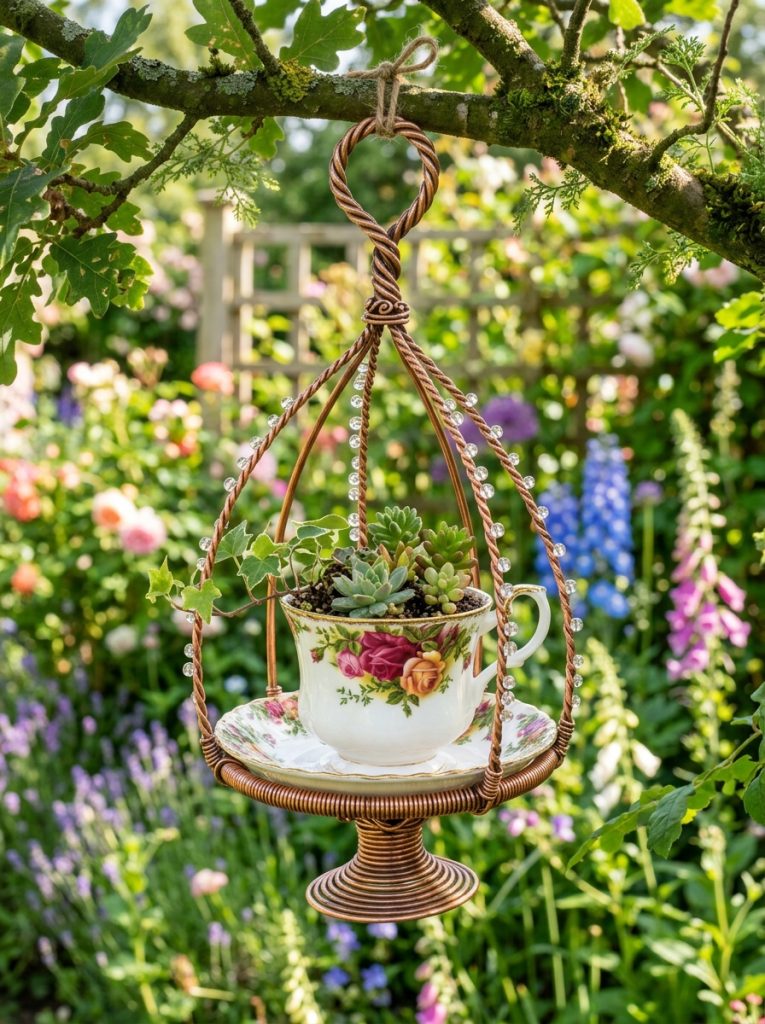
Geometric Diamond Lattice Caddy
Step-by-Step Guide
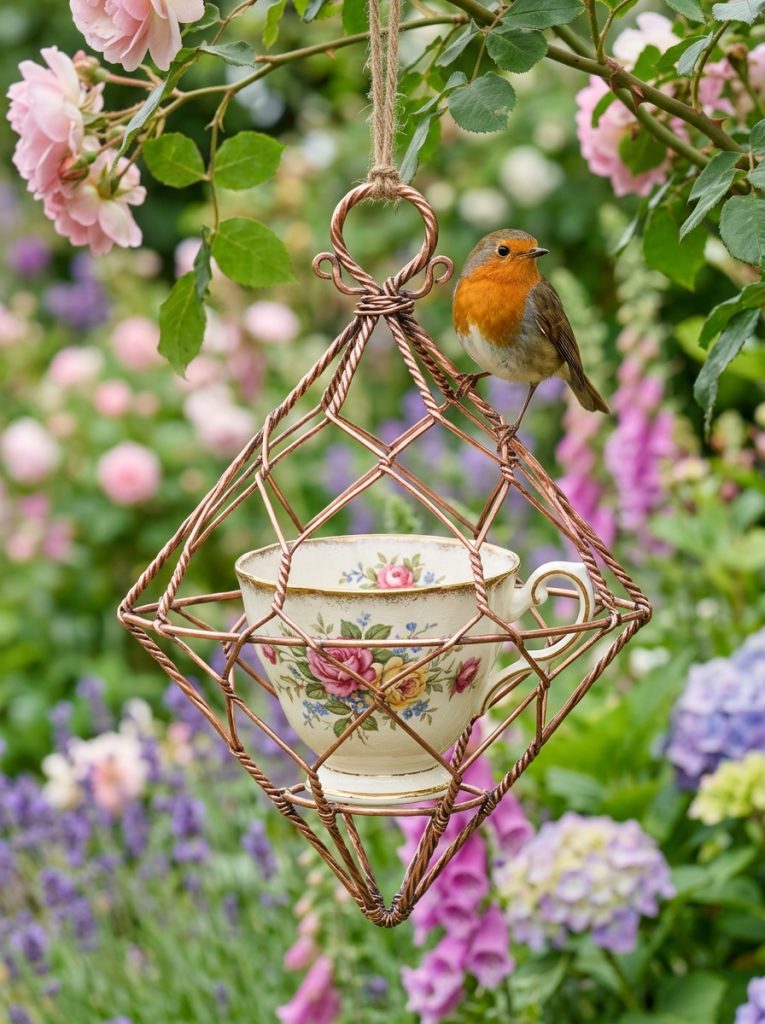
Design a modern geometric copper harness by creating an interconnected diamond lattice pattern around the body of a vintage teacup. Cut eight three-foot lengths of sixteen-gauge copper wire, binding their midpoints together beneath the saucer using a tight central wrapping coil. Spread the eight wire legs radially outward across the underside of the saucer, bending each strand upward over the rim. Cross adjacent wires over one another along the cup sides, twisting them at precise one-inch intervals to form a continuous grid of diamond shapes. Place a secondary wrap of twenty-gauge copper wire around the upper lip of the teacup, securing each lattice point firmly to the rim band. Gather the top eight wire ends three inches above the cup opening, twisting them together tightly into a heavy-duty copper hanging loop. This structural diamond casing provides exceptional stability while showcasing intricate metalwork against delicate porcelain patterns.
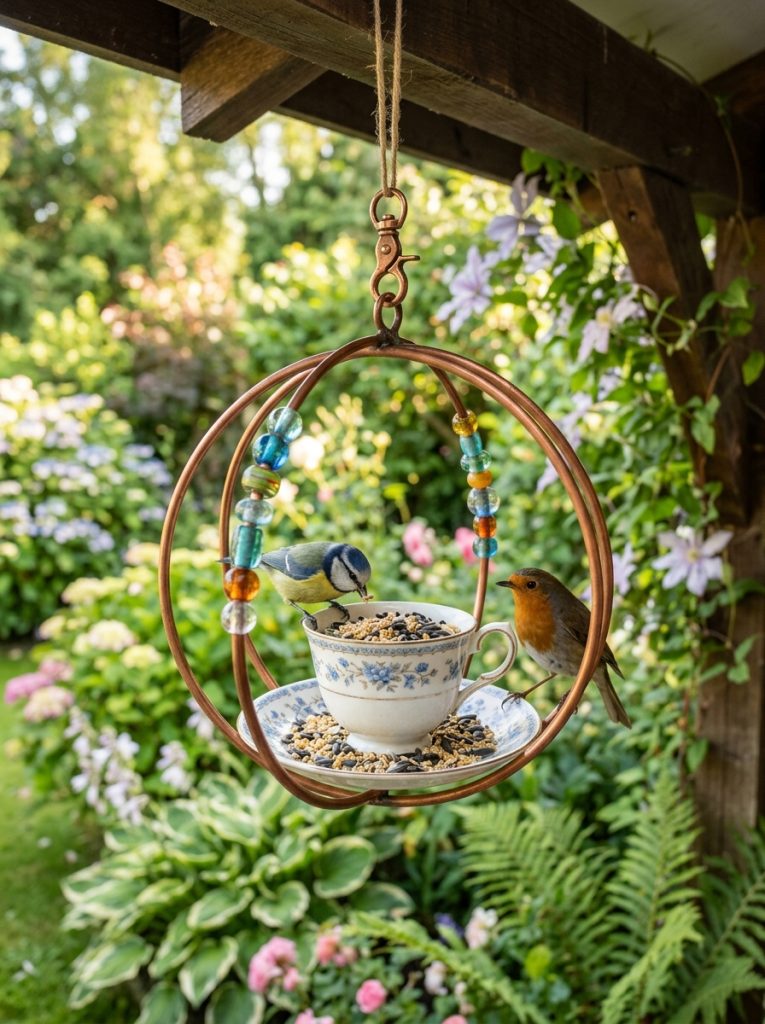
Interlocking Dual-Ring Cradle with Bead Accents
Setup Method
Build a sleek structural holder utilizing two thick copper rings that cross at right angles beneath a vintage teacup and saucer set. Shape two eighteen-inch pieces of heavy twelve-gauge copper wire into circular hoops that match the exterior profile of the porcelain saucer. Cross the two hoops at ninety degrees along the bottom center, soldering or tightly wrapping the junction with fine twenty-gauge binding wire. Nest the saucer and teacup assembly smoothly inside the lower half of the crossed copper framework. Thread colorful glass craft beads onto the four upright wire arms, sliding them down until they rest against the saucer rim to act as decorative stoppers. Crimp the top wire ends together using chain-nose pliers, attaching a heavy copper swivel clip for effortless hanging. This clean design offers an uncluttered visual presentation that highlights fine ceramic details.
Suspended Tiered Crown Frame
Execution Process
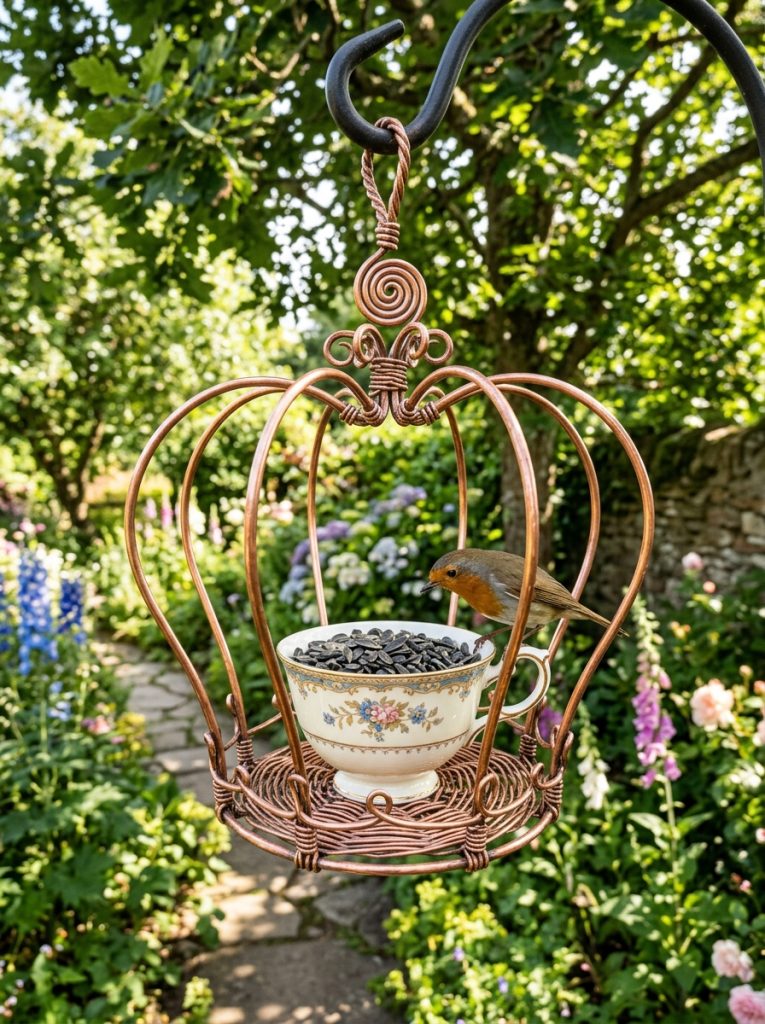
Form an regal crown-style copper cage by forming a circular base ring that sits snugly beneath the saucer rim. Cut six two-foot pieces of sixteen-gauge copper wire, anchoring one end of each piece evenly around the circular base ring using tight wire wraps. Curve the six vertical wire ribs upward and outward over the saucer edge, hugging the natural contours of the upright teacup face. Arch the wire strands inward above the open cup, meeting at a central point five inches above the rim to imitate the shape of an imperial crown. Wrap the top convergence point tightly with fine copper wire, adding an ornamental copper spiral loop at the apex for hook attachment. Fill the teacup with black oil sunflower seed, allowing small songbirds to perch comfortably along the arched wire ribs while feeding.
Helical Vine Wrap with Leaf Loops
How to Make
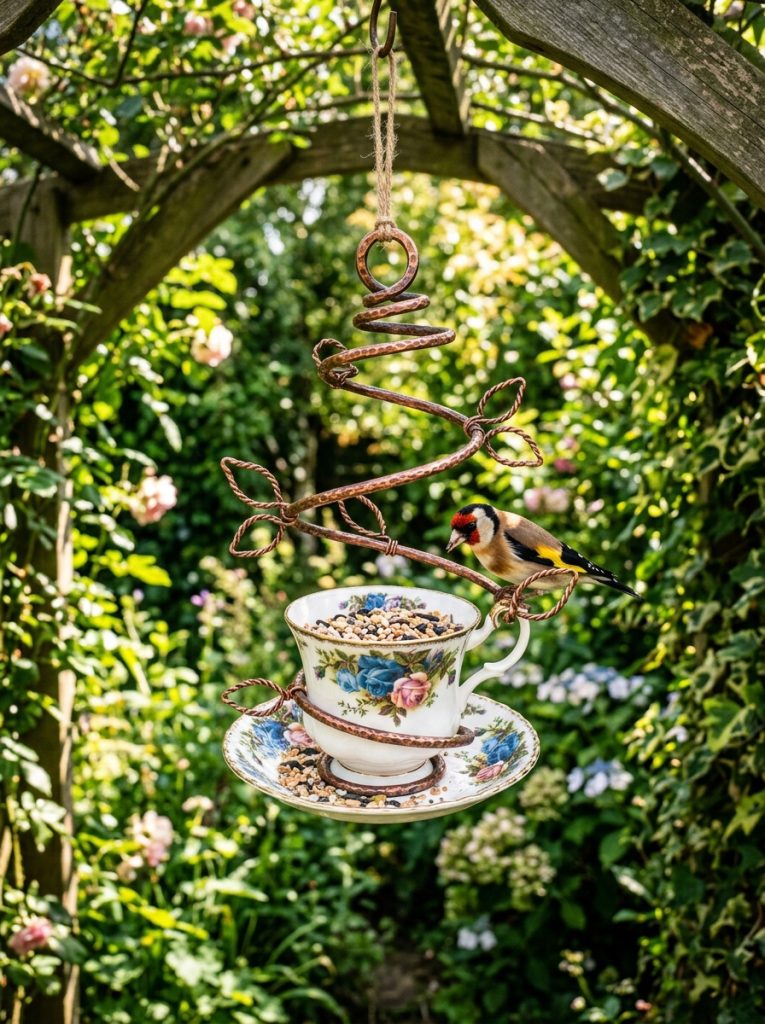
Craft an organic, nature-inspired feeder frame by wrapping a continuous coil of thick copper wire in an ascending spiral around a vintage teacup set. Form a stable three-ring flat spiral at the bottom to support the base of the saucer. Guide the remaining copper wire upward in a wide helical path around the saucer edge and cup body, maintaining an even half-inch gap between the wire and ceramic surface. Form decorative leaf-shaped loop accents along the spiral path by twisting the copper wire back on itself using round-nose pliers at three evenly spaced intervals. Secure the upper end of the continuous spiral to a three-strand copper harness attached to the saucer rim, bringing all wires together into a top hanging loop. This artistic, free-flowing method provides a rustic botanical look that blends seamlessly into garden foliage.
Radial Starburst Base with Four-Pillar Harness
Step-by-Step Guide
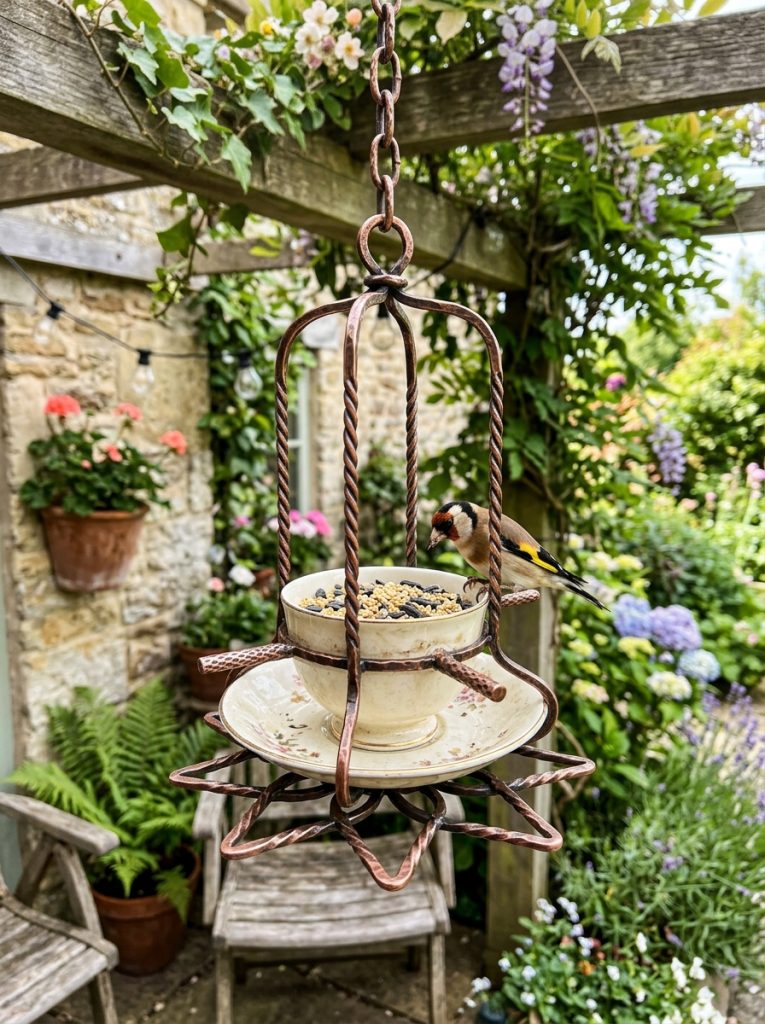
Construct an intricate star-patterned support structure by crisscrossing four long pieces of sixteen-gauge copper wire beneath the center of a porcelain saucer. Bend the wire intersections to create an eight-pointed star motif across the underside of the saucer base, providing rigid bottom support. Bend the eight extending wire strands upward around the outer rim of the saucer, pairing adjacent wires together to create four double-strand vertical pillars. Run these four copper pillars straight up the sides of the teacup, binding each pair with fine twenty-gauge copper wire at the mid-height line for structural reinforcement. Curve the four double pillars over the top opening, joining them at a high center point using a decorative wire coil. This balanced starburst base provides maximum weight capacity, making it ideal for holding heavier stoneware teacups filled with dense suet or seed mixes.
Corner-Anchor Triangular Wire Trellis
Setup Method
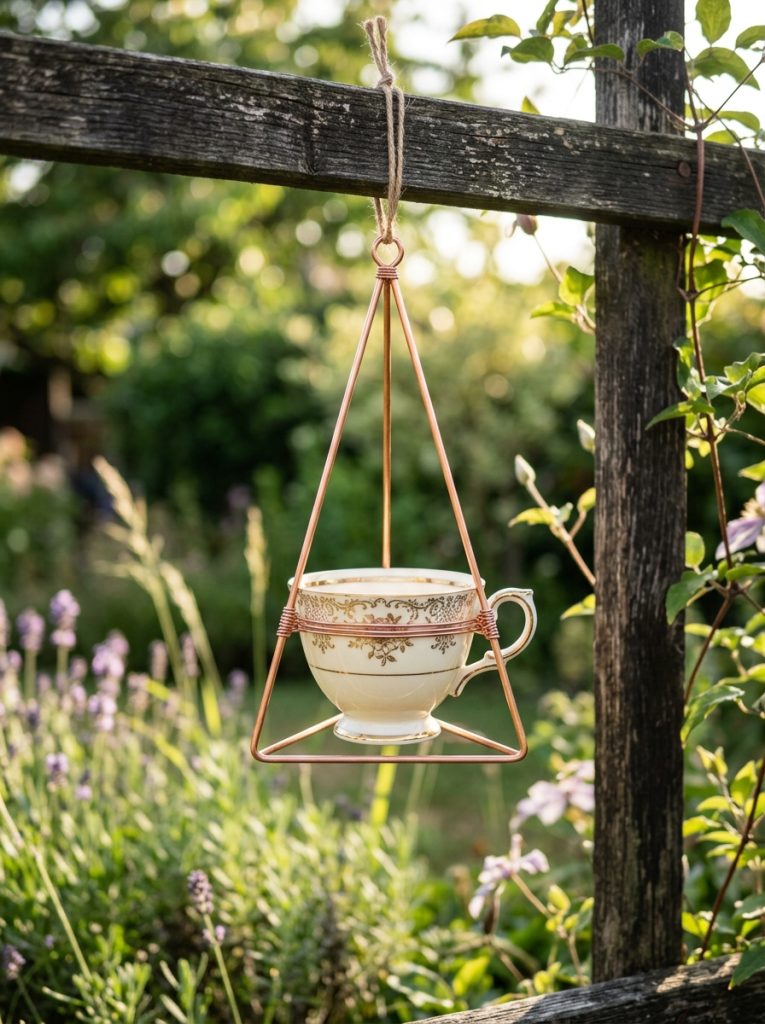
Assemble a striking minimalist style feeder harness based on a three-point triangular wire framework. Form a rigid copper wire triangle that fits tightly against the bottom ring of a vintage saucer using heavy twelve-gauge copper wire. Attach a single two-foot strand of sixteen-gauge wire to each of the three corners of the copper triangle using tight wrap joins. Bring the three vertical strands upward past the saucer edge and along the teacup walls at equal one-hundred-twenty-degree intervals. Wrap a thin strand of horizontal copper wire around the waist of the teacup, anchoring each of the three main vertical wires to it to prevent slipping. Connect the three top wire ends at a central ring three inches above the cup opening. This efficient three-pillar layout uses minimal metal, ensuring the original painted artwork on the vintage china remains fully visible.
Symmetrical Double-Loop Handle Anchor
Execution Process
Utilize the natural structure of a vintage teacup handle by integrating it directly into a symmetrical copper wire hanging harness. Wrap a long length of sixteen-gauge copper wire securely around the porcelain handle root, anchoring the starting point with multiple tight coils. Pass the wire beneath the saucer base to form a wide supporting cross-strap, bringing the opposite end up the far side of the cup. Repeat this wrapping process across the perpendicular axis, creating a full four-point support grid beneath the saucer. Form two large, symmetrical copper loops on opposite sides of the cup rim, utilizing the cup handle as a stabilizing balance point for one side. Connect a two-strand copper hanging bridle to the top loops to suspend the feeder evenly. This smart structural arrangement uses the teacup handle as a key anchor point, providing high stability.
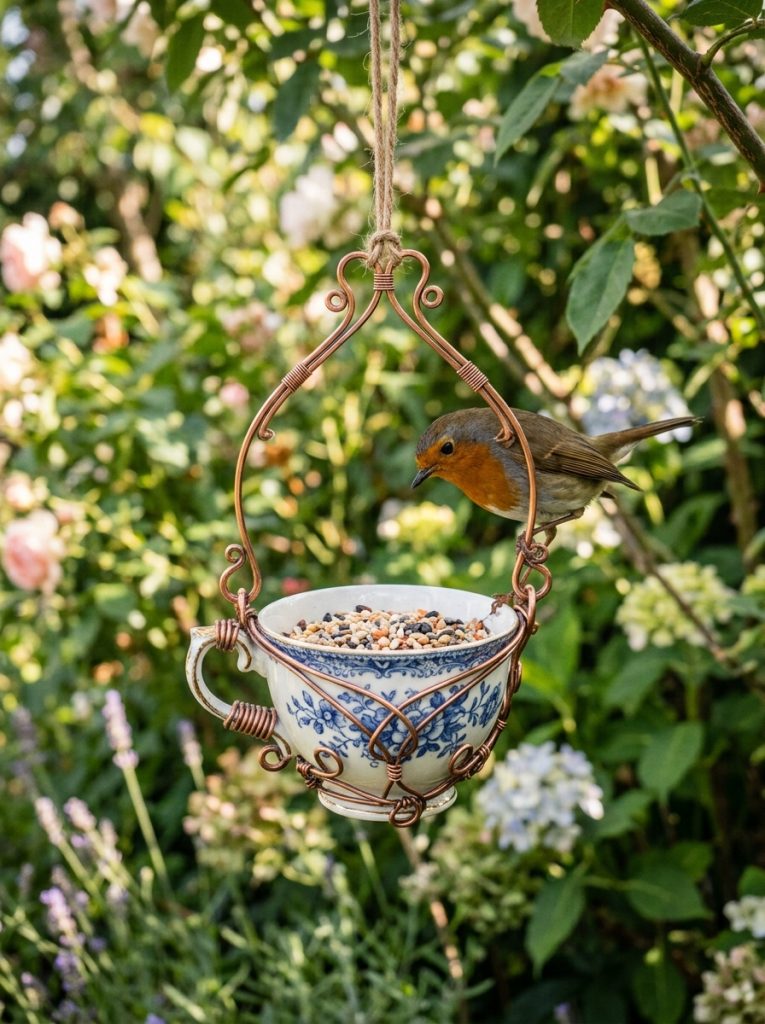
Offset Tilted Pour Harness with Drop Loop
How to Create
Design an interactive gravity-fed bird feeder by mounting a vintage teacup in a permanently tilted position on its matching saucer using a custom copper framework. Form a flat circular wire base that sits beneath the saucer, extending a rigid copper support arm upward at a forty-five-degree angle. Rest the bottom rim of the teacup against the saucer while securing its body to the angled copper support arm using fine copper binding wire. Pass a main hanging wire through the handle of the tilted cup, looping it securely around the underlying saucer frame to keep the components tightly bound. Fill the tilted cup with birdseed, allowing the food to pour naturally onto the front tray of the saucer as wild birds consume it. This dynamic setup creates an automatic seed-dispensing station that protects food from rain accumulation.
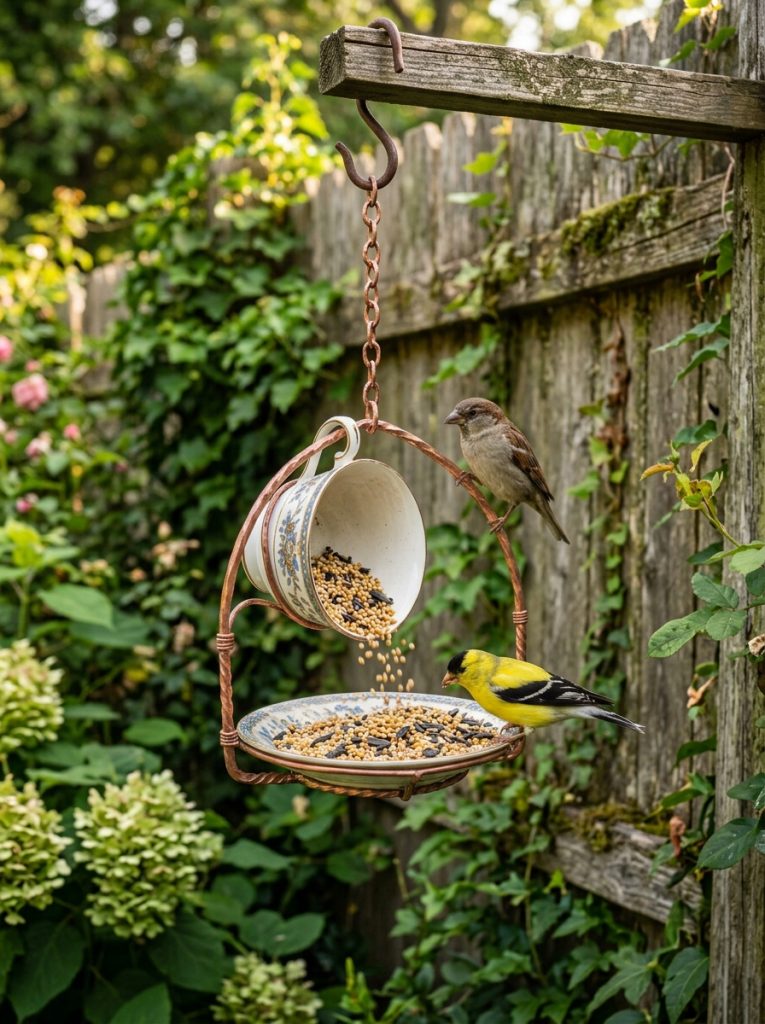
Caged Lantern Frame with Bead Finial
Step-by-Step Guide
Construct an enclosed lantern-style copper cage that fully surrounds a vintage teacup and saucer assembly. Form two matching circular copper wire rings, placing one beneath the saucer base and one four inches above the teacup rim. Join the two horizontal rings using six vertical sixteen-gauge copper wire pillars, creating a cylindrical bird cage frame around the porcelain pieces. Bend short horizontal perching pegs into each vertical wire pillar just above the level of the saucer rim to give songbirds extra standing room. Top the upper copper ring with a decorative wire dome that converges at an ornamental bead finial fitted with a hanging hook. This comprehensive cage design offers robust protection against large garden debris while creating a sophisticated, vintage-inspired focal point for porches and garden arbors.
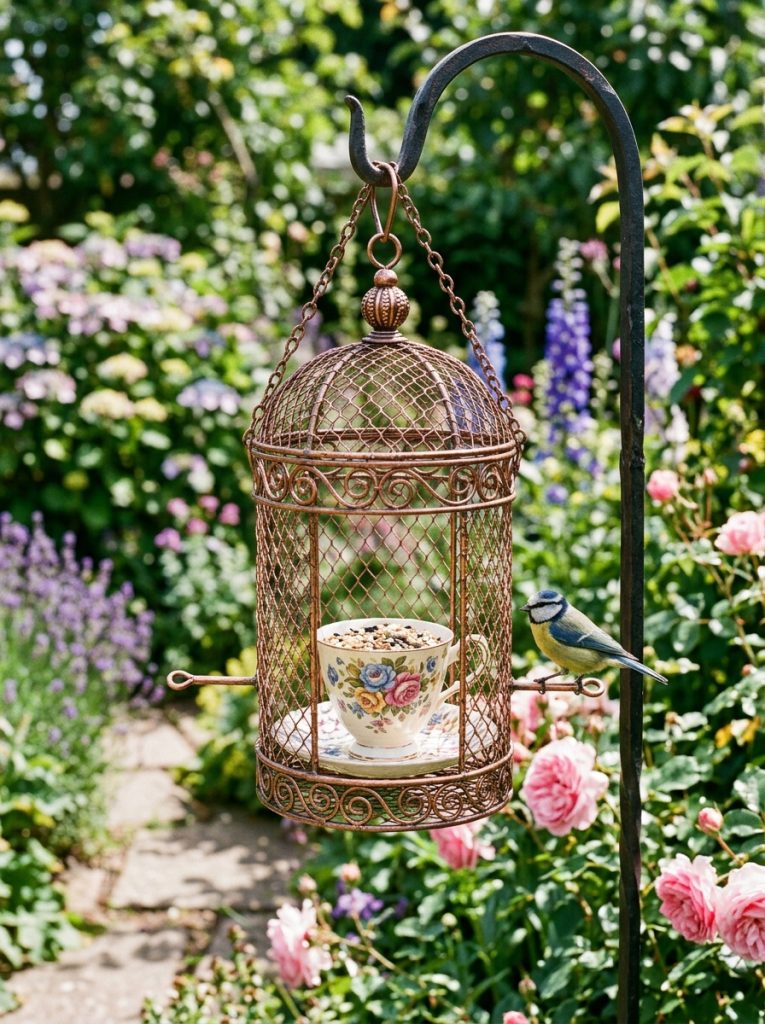
Common Beginner Mistakes and How to Avoid Them
A frequent mistake when crafting copper wire wrapped teacup feeders is using wire gauges that are too thin to support heavy ceramic pieces. Light crafting wire bends easily under the weight of seed and visiting birds, causing the porcelain to slip out of the harness. Always select structural sixteen-gauge or twelve-gauge copper wire for the primary frame, reserving thinner twenty-gauge wire strictly for delicate binding and wrapping. Another common error is failing to create a wide enough base support beneath the saucer. Narrow bottom wire loops allow the saucer to tilt or wobble during windstorms. Ensure the base wire footprint covers at least two-thirds of the saucer bottom to guarantee a level, stable resting platform. Finally, avoid over-tightening wire wraps against thin bone china, as excessive localized mechanical pressure can crack delicate antique porcelain edges.
Practical Tips for Better Results
Achieving professional durability in wire-wrapped projects requires careful tool handling and precise wire tensioning. Work with raw, unprinted copper wire rather than coated craft wire, as uncoated copper develops an attractive natural verdigris patina over time that enhances outdoor garden decor. Use nylon-jaw pliers or cover metal plier tips with electrical tape when shaping structural bends to prevent scratching the smooth surface of the copper wire. When wrapping delicate ceramics, place small clear rubber bumper pads along the inner wire contact points to increase friction and cushion the porcelain against metal impact. Always test the balance of the completed feeder by hanging it from a test hook before filling it with birdseed, adjusting individual wire lengths as needed to ensure the cup sits completely level.
Styling, Presentation, or Organization Ideas
Integrating handmade copper teacup feeders into outdoor landscapes requires strategic placement and thoughtful color coordination. Group three wire-wrapped feeders at varying drop heights from a single large shade tree branch to create a dynamic vertical visual display. Choose vintage teacups featuring floral patterns that complement nearby garden blooms, such as rose motifs near climbing arbors or pastel shades near spring bulb beds. Integrate clear glass or iridescent acrylic beads along upper hanging wires to catch direct sunlight, casting subtle ambient reflections through surrounding foliage. Keep raw materials organized during crafting by sorting wire spools by gauge and storing beads in compartmented clear organizers. Storing extra birdseed in galvanized metal dispensers near the hanging site streamlines daily refilling routines while keeping garden areas clean and organized.
Budget or Time Planning
Creating custom copper wire teacup bird feeders is an economical DIY project that provides high-end decorative value on a modest budget. Sourcing single vintage teacups and matching saucers from local thrift stores or estate sales typically involves minimal cost per set. Buying raw copper wire in bulk spools from hardware suppliers significantly reduces material expenses compared to purchasing small craft store packs. Completing a single wire-wrapped feeder generally requires approximately one to two hours of active construction time, making it an ideal weekend creative project. Planning to craft multiple feeders in a single session allows makers to pre-cut wire lengths and batch-assemble basic base frames efficiently. These handmade features serve as thoughtful, cost-effective gifts for gardening enthusiasts and birdwatching hobbyists alike.
Creative Expansion and Advanced Inspiration
Once basic copper wire wrapping techniques are mastered, crafters can expand their outdoor projects by building elaborate multi-tiered garden displays. Connect two or three wire-wrapped teacup feeders vertically using copper chain links, creating a cascading feeding tower for songbirds. Integrate small copper wire spirals along the base frame to hold fresh fruit slices or suet balls alongside standard seed mixes. Add solar-powered micro-fairy lights wrapped along the upper copper wire cage to gently illuminate the hanging feeder during evening hours, transforming the feature into an evening garden light fixture. Experimenting with advanced wire-weaving patterns or mixing copper with brass accents allows makers to create unique, heirloom-quality garden art that elevates outdoor home decor aesthetics throughout every season.