10 Modular Under-Bed Rolling Drawer Storage Dorm Room Ideas
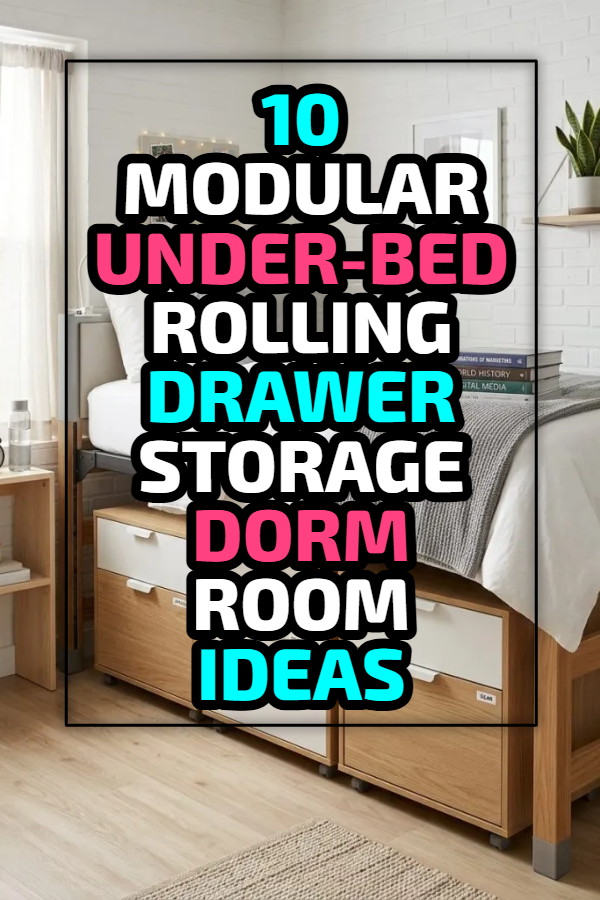
Under-bed modular rolling drawers have become a major staple in modern dorm room aesthetic trends due to their high functional adaptability and clean minimalist style appeal. Standard dorm wardrobes and dressers rarely provide adequate storage space for a full academic year’s worth of wardrobe changes, shoes, and academic supplies. Rolling storage drawers solve this spatial crunch by creating custom pull-out compartments that glide out smoothly without scratching dorm flooring or damaging rugs. Their modular nature allows students to reconfigure individual bins, combine stackable frames, or adjust layout orientation whenever room setups change. Furthermore, these units represent an exceptionally beginner friendly DIY project that requires zero permanent modifications to university property, making them fully landlord-approved. Combining accessible assembly with customizable visual finishes, mobile under-bed storage bridges the gap between utilitarian organization and sophisticated interior styling for budget-conscious students.
Materials and Preparation
Successful under-bed storage integration begins with meticulous measurement and material selection before purchasing or assembling any components. Start by measuring the vertical clearance from the floor to the bottom of the bed frame, as well as the total depth and width available between the bed legs. Consider whether bed risers will be installed, as elevating the frame adds valuable vertical clearance for deeper rolling bins. Choose lightweight yet durable construction materials such as smooth finished plywood, rigid wire mesh, or heavy-duty polypropylene plastic bases paired with omnidirectional caster wheels. Gather basic assembly tools, including a tape measure, screwdriver, industrial adhesive tape, and non-marking rubber casters designed for low-friction movement on carpet or hardwood. Pre-plan individual drawer compartments based on item categories to ensure every drawer serves a clear organizational purpose within the overall room layout.
1. Dual-Tier Stacking Sliding Drawers
Setup Method
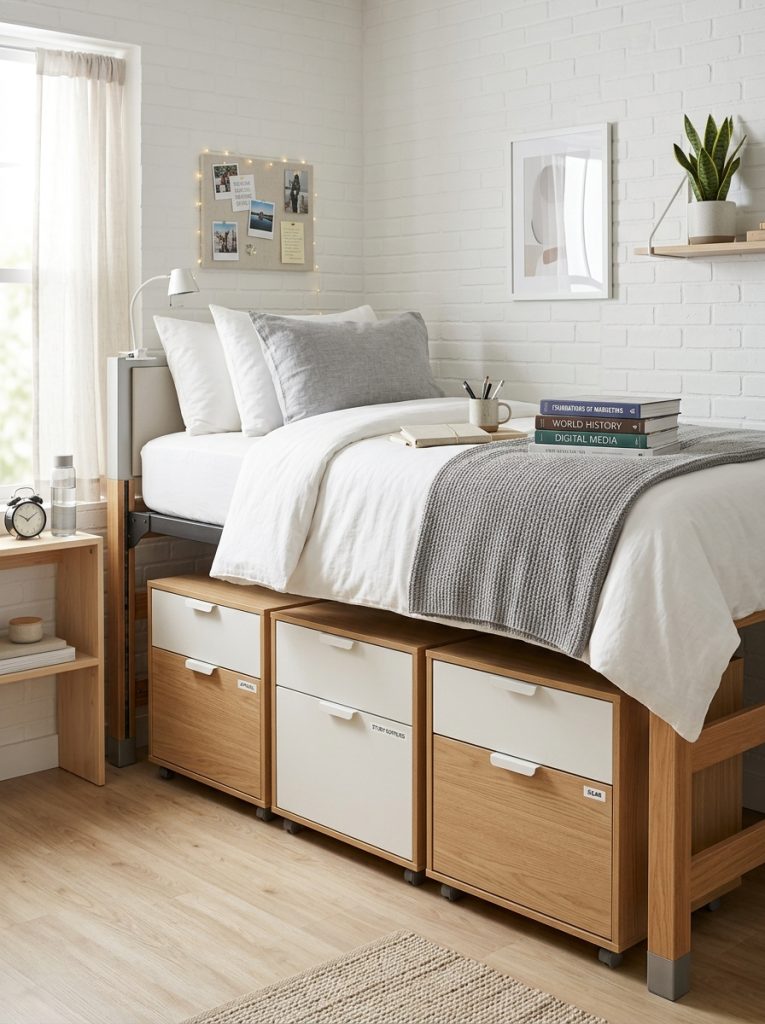
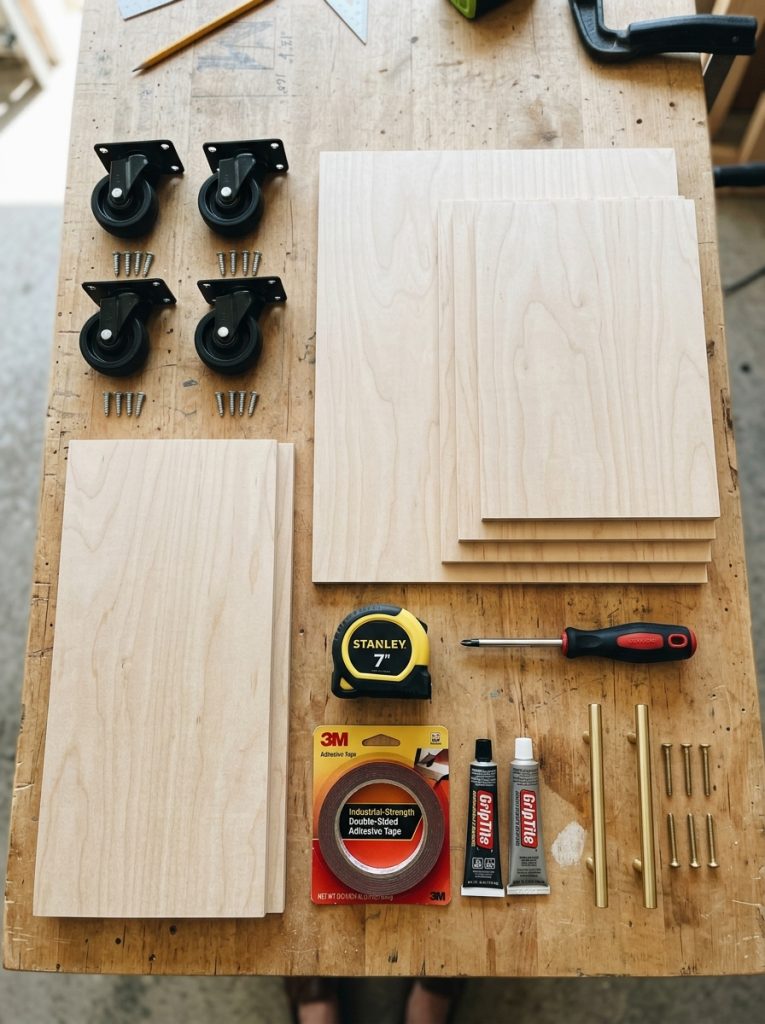
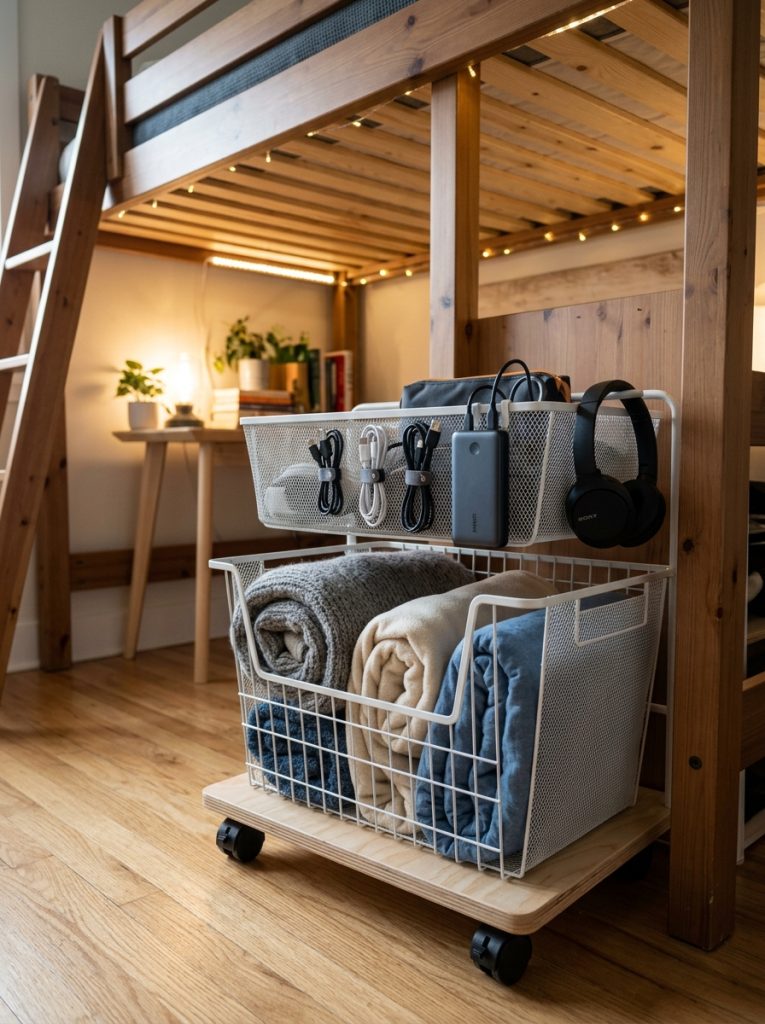
Build a elevated two-level storage unit using low-profile acrylic or coated wire drawer frames mounted onto a shared rolling platform base. Attach four heavy-duty locking caster wheels to a sturdy plywood base panel cut precisely to match the dimensions of the bed frame’s lower clearance. Secure the lower drawer unit directly to the base panel using countersunk screws, then attach interlocking stackable connector clips along the top edges to hold the upper sliding drawer firmly in place. This dual-layer setup allows deep access for infrequently used items in the bottom section, while the top sliding tray holds daily essentials like tech accessories, charging cables, and personal care items. Keep drawer depths under seven inches per tier to fit standard raised dorm beds smoothly without hitting frame crossbars.
2. Fabric Bin Rolling Platform Caddy
Execution Process
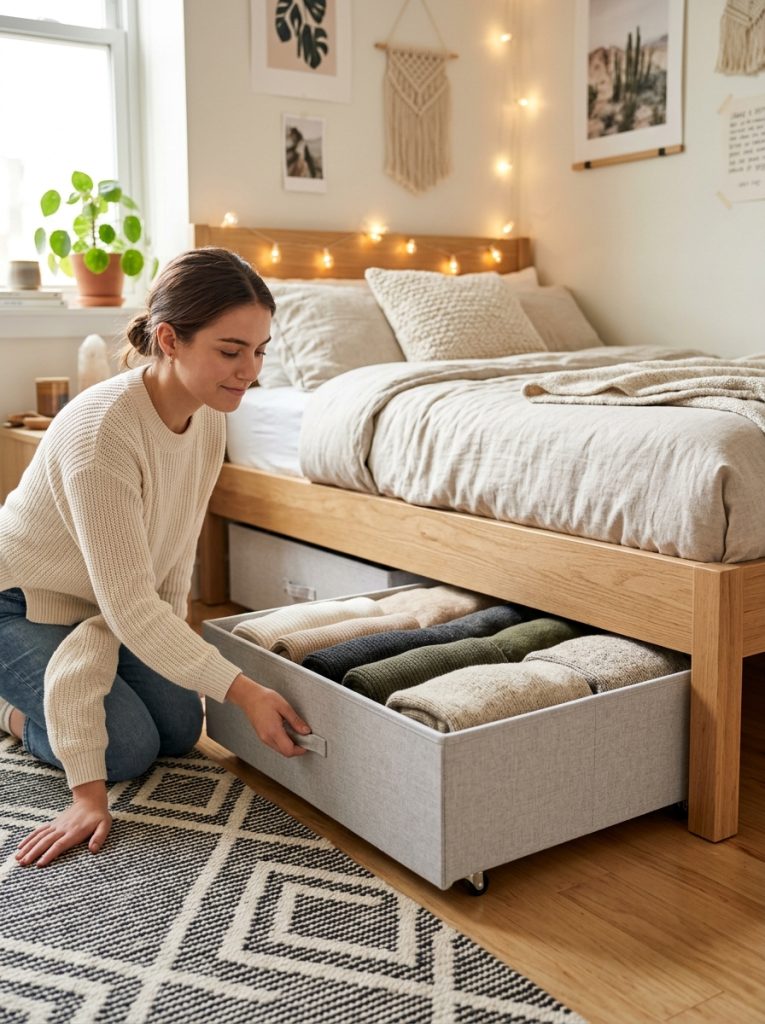
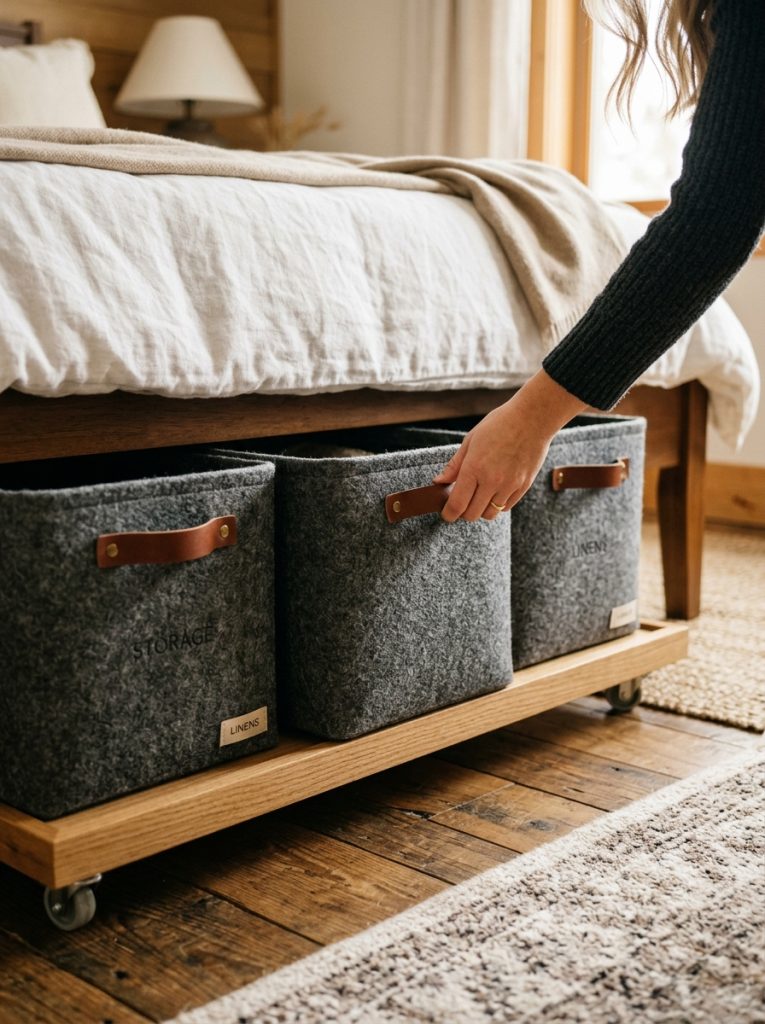
Construct a warm, textured rolling tray by mounting caster wheels beneath a finished wooden base, then inserting matching canvas or felt storage cube bins directly on top. Secure four swivel casters to the bottom four corners of a smooth, sanded pine board treated with a matte clear coat or protective wood sealer. Install two low-profile metal handles on the front edge of the wooden board to allow easy pulling and pushing from beneath the mattress. Place rigid fabric bins side-by-side on the wooden tray, using velcro adhesive strips on the bottom of the bins to keep them from sliding out of alignment during movement. This hybrid design combines the structure of a mobile dolly with the soft, noise-reducing qualities of fabric organizers, making it ideal for storing sweaters and delicate apparel.
3. Divided Wooden Shoe and Boot Locker
Step-by-Step Guide
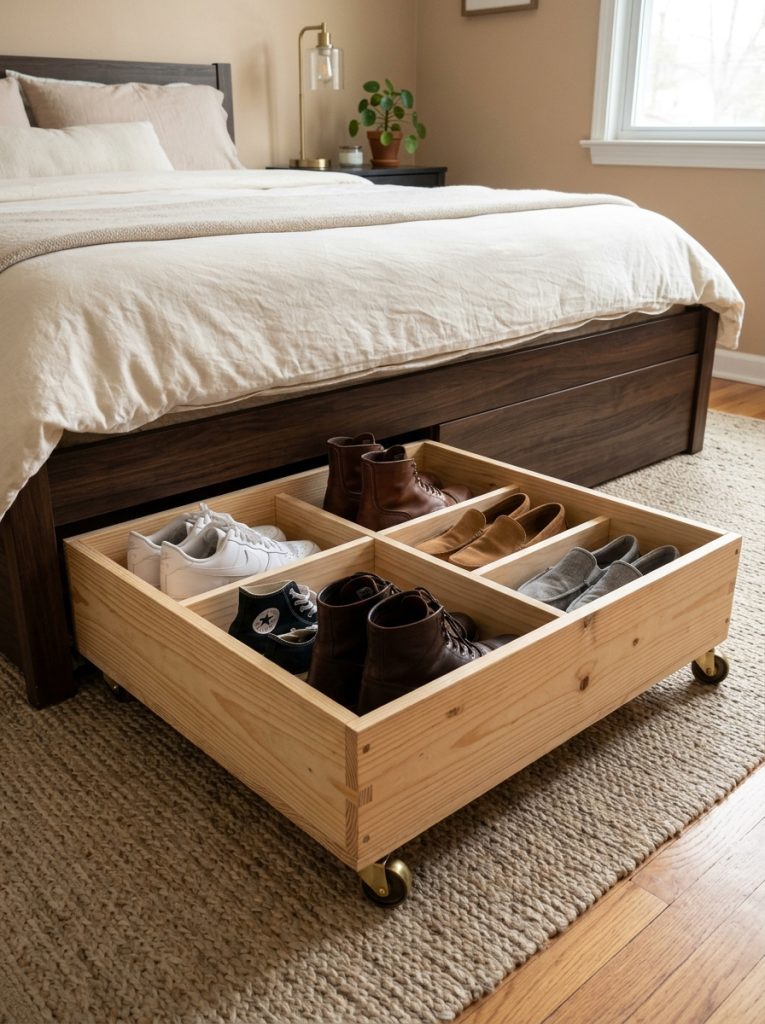
Assemble an open-top wooden rolling box featuring adjustable internal dividers designed specifically for footwear storage under the bed. Cut a main rectangular frame from three-quarter-inch birch plywood, joining the corners with flush wood screws and reinforcing the bottom panel with a center support brace. Install caster wheels directly to the four outer corners of the bottom panel, selecting soft polyurethane wheels to prevent scuffing dorm tile or laminate floors. Insert pre-cut slotted wooden panels or adjustable plastic dividers inside the drawer box to create customized grids tailored for sneakers, boots, and casual shoes. Paint the exterior of the wooden box in a neutral tone matching your bedding aesthetic, and add a flush drawer pull on the front face for a sleek, modern finish.
4. Clear Modular Locking Container Grid
How to Create
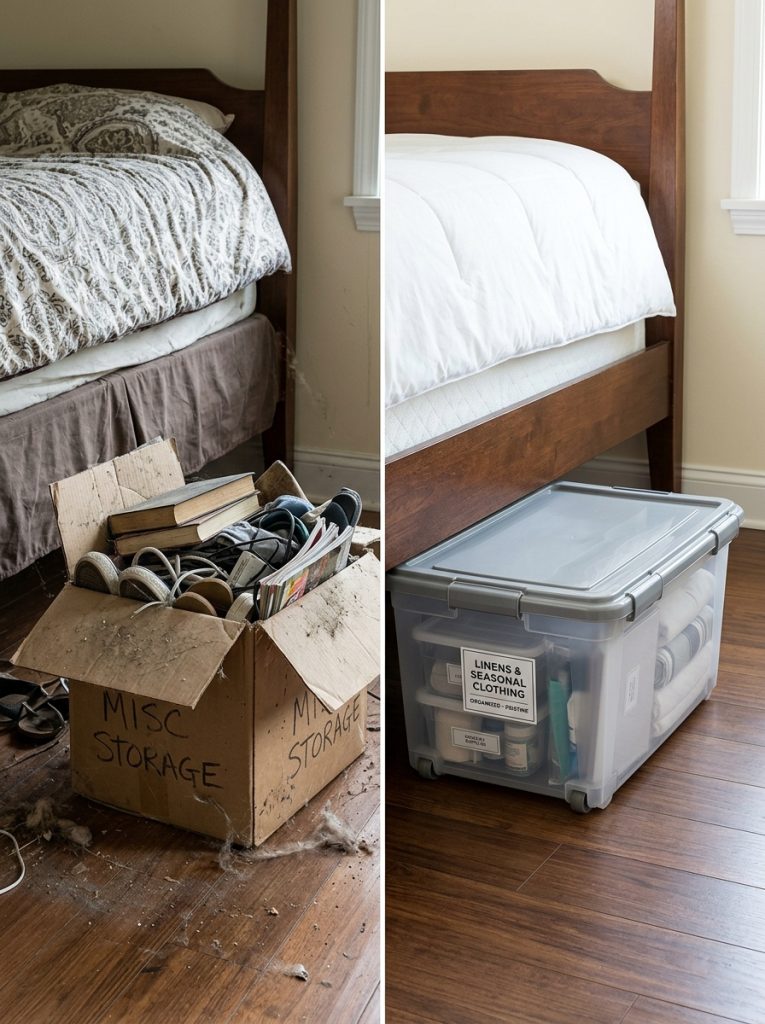
Custom wooden under-bed storage box. Source: Kreg ToolUtilize a series of clear, heavy-duty plastic storage bins fitted with bottom roller wheels and latching lids to form a dust-proof storage grid. Measure the width of your bed frame to determine how many uniform containers can sit side-by-side, aiming for two rows of two or three containers depending on total bed depth. Attach stick-on caster wheels or select commercial under-bed plastic tubs with built-in recessed wheels to maintain the lowest possible vertical profile. Group items into specific categories within each clear bin, labeling the outer front panels with removable vinyl text or chalk tags for instant visual identification. The clear plastic construction allows immediate visibility of stored items, while the snap-latch lids protect extra bedding, seasonal clothes, and winter coats from dust accumuation.
5. Wire Mesh Pull-Out Basket System
How to Make
Assemble a lightweight, ventilated storage system using heavy-gauge metal wire mesh baskets mounted on a rolling base frame. Secure four multi-directional caster wheels to the corner plates of a rectangular steel frame or reinforced metal grid panel. Place high-walled wire mesh storage baskets into the frame slots, using zip ties or heavy-duty metal clips to prevent individual baskets from shifting during operation. Line the interior bottom of the mesh baskets with removable felt pads or shelf liners to prevent small personal items from slipping through the wire grid. This breathable setup provides maximum air circulation, making it the ideal creative project for storing athletic gear, extra towels, shoes, and laundry items that require continuous ventilation.
6. Labeled Rolling Book and File Crate
Setup Method
Transform a traditional wooden crate into a mobile academic storage hub by attaching swivel casters and interior file hanging rails. Sand down an industrial wooden crate until smooth, removing any rough edges or splinters that could catch on bedding or carpet fibers. Screw four heavy-duty locking casters onto the bottom four corners, ensuring the screws do not penetrate through the floor of the crate interior. Install aluminum hanging folder rails along the upper inside edges to organize class notebooks, textbooks, loose-leaf papers, and semester project folders systematically. Apply a coat of stain or modern pastel paint to match your room decor, and attach a metal label holder on the front panel to keep academic materials perfectly cataloged and easily retrieved.
7. Recycled Dresser Drawer Rolling Cart
Execution Process
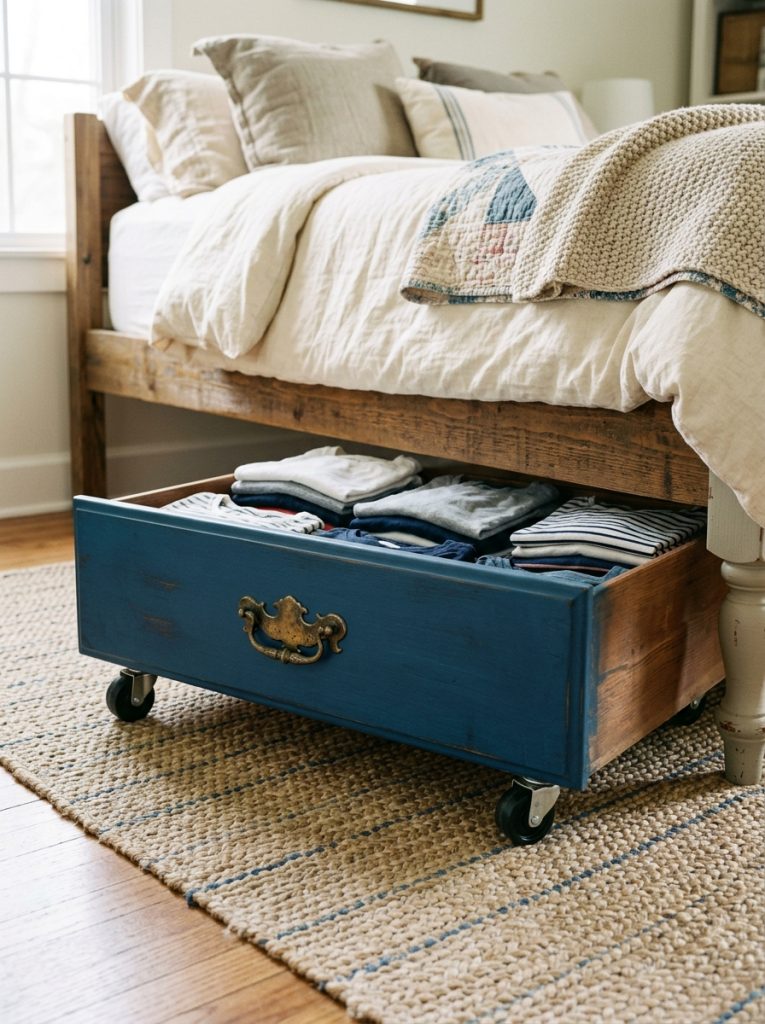
Repurpose a vintage or reclaimed wooden dresser drawer into an elegant, custom under-bed rolling storage container with minimal tools. Remove old drawer slides or side hardware from the exterior sides of the reclaimed drawer, filling any leftover screw holes with wood filler and sanding the surfaces completely flush. Screw four low-profile ball-bearing caster wheels directly into the four reinforced bottom corners of the drawer box structure. Paint or stain the exterior surfaces in a color scheme that complements your dorm room aesthetic, finishing the front face with a decorative brass or matte black handle. Insert adjustable felt or cardboard drawer dividers inside the cart to keep small items, accessories, and folded t-shirts organized without shifting during rolling movement.
8. Soft-Top Padded Bench Rolling Drawer
Step-by-Step Guide
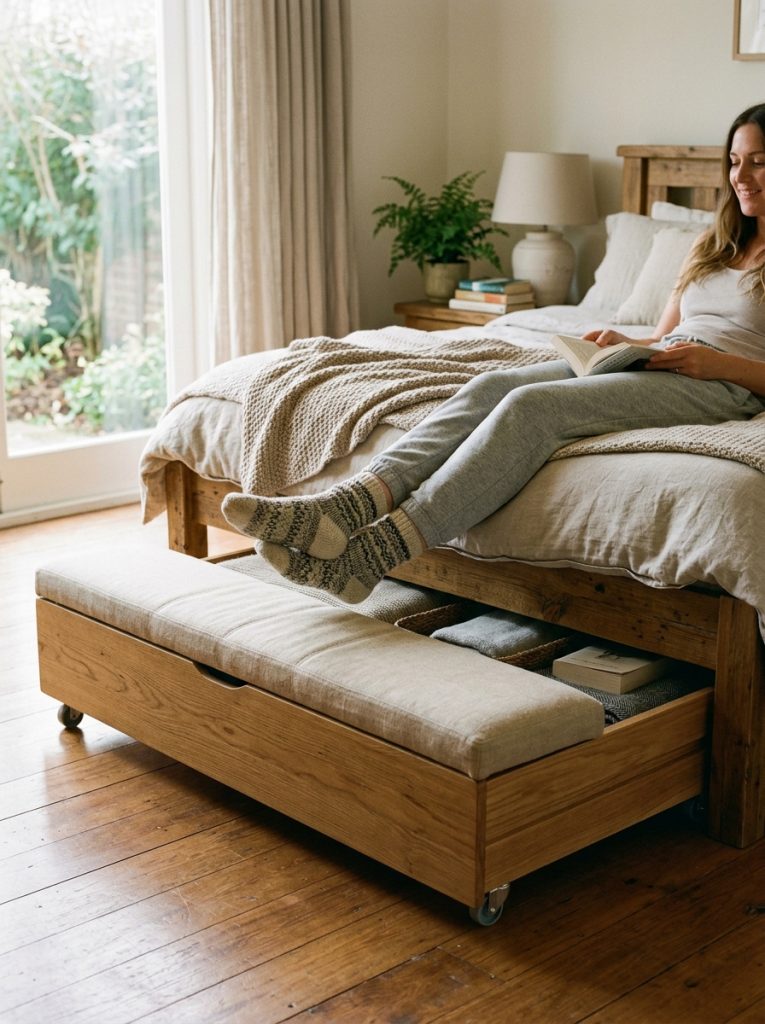
Construct a multi-functional rolling storage box featuring a cushioned top lid that doubles as a comfortable footrest or extra seating when pulled out from under a elevated bed frame. Build a sturdy wooden drawer box using half-inch medium-density fiberboard, reinforcing all corner joints with metal angle brackets for maximum structural stability. Attach four heavy-duty caster wheels to the bottom base, ensuring the total height remains two inches below the bottom of the bed frame edge. Create a removable top lid using a piece of plywood covered with high-density foam padding and wrapped in a durable, stain-resistant canvas or velvet fabric attached with staple-gun fasteners. This design offers hidden, dust-proof internal storage for bulky items while serving a dual purpose as casual seating in tight dorm room spaces.
9. Under-Bed Hideaway Desk Extension Tray
How to Create
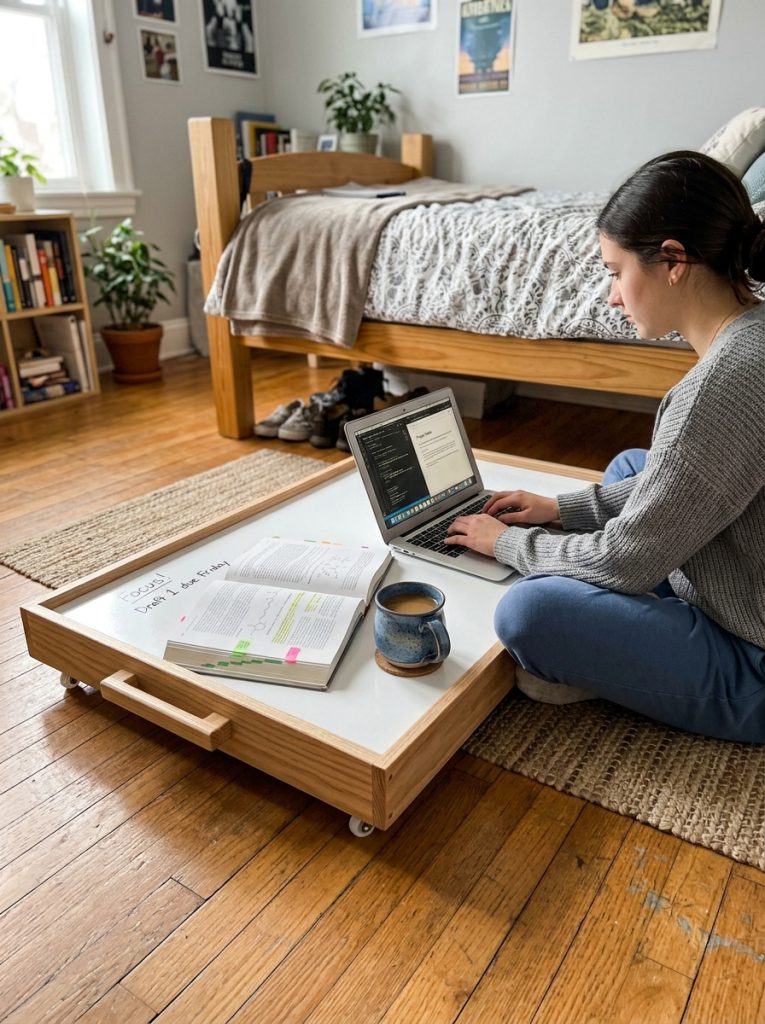
Design a wide, flat rolling platform that serves as a pull-out secondary workspace or craft tray for dorm rooms with limited desk surface area. Cut a smooth sheet of three-quarter-inch void-free plywood to a wide rectangular dimension matching the length of your side bed rails. Install six low-profile omnidirectional caster wheels distributed evenly across the bottom surface to support weight without sagging in the middle section. Attach raised wooden trim moulding along three edges of the top surface to create a protective lip that prevents pens, papers, and tech devices from sliding off during extension. Finish the top surface with a smooth, wipeable laminate sheet or dry-erase board material, allowing you to pull out a clean work surface instantly for studying or creative projects.
10. Low-Profile Sliding Valet Organizer
Setup Method
Build a ultra-slim, specialized rolling tray equipped with shallow compartments and velvet-lined trays designed specifically for accessories, jewelry, and daily wear items. Assemble a shallow rectangular wooden frame no higher than four inches in total depth, pairing it with ultra-low-profile caster wheels or smooth plastic glider discs. Divide the interior layout into small geometric sections using thin balsa wood strips, lining each compartment with soft adhesive-backed felt or velvet sheets. Add dedicated watch pillows, ring slots, and flat trays for sunglasses, keys, wallets, and daily personal gear to prevent scratch damage. Slide this shallow valet tray under the lowest clearance points of the bed, creating an easily accessible, dedicated zone for personal accessories that usually clutter desktop surfaces.
Common Beginner Mistakes and How to Avoid Them
One of the most frequent errors students make when setting up under-bed storage is failing to accurately measure clearances before buying materials. Always measure the vertical height from the floor to the lowest hanging part of the bed frame, including center support beams or mattress slats. Another common mistake is choosing wheels that are unsuitable for the room’s specific flooring material. Hard plastic wheels can scratch polished dorm laminate, while small wheels can get stuck in plush carpeting; always opt for smooth polyurethane swivel casters or larger rubber wheels. Additionally, overpacking rolling drawers causes structural strain and makes units difficult to pull out smoothly. Maintain balanced weight distribution inside each drawer and avoid stacking items beyond the top rim of the container. Finally, neglecting dust protection can lead to dirty linens and clothes; always use covered bins or fabric dust covers over open-top wooden drawers.
Practical Tips for Better Results
To achieve maximum performance from modular rolling drawers, apply lubricated silicone spray to caster wheel bearings annually to ensure silent, smooth gliding across all floor surfaces. Label every drawer compartment clearly on its front-facing panel using removable chalkboard tags or vinyl lettering so contents can be identified without pulling drawers completely out. Group items by frequency of use, placing daily wardrobe choices near the front edge of the bed frame and seasonal items toward the center under-bed space. Utilize modular felt bins or acrylic drawer dividers inside large rolling crates to keep smaller items like socks, cables, and stationery from sliding into a messy heap during movement. If your dorm bed frame height is adjustable, raise it to the highest pin setting or use heavy-duty safety risers to maximize vertical storage potential instantly.
Styling, Presentation, or Organization Ideas
Visual cohesion is key to maintaining a clean aesthetic when implementing under-bed rolling storage in a shared dorm room. Choose storage units that match the existing color tone of your bed frame, desk, or wardrobe to create a seamless, built-in furniture appearance. Paint raw wooden crates or plywood boxes in neutral white, warm beige, or muted gray shades that complement your main bedding textiles. Install front faceplates or decorative dust skirts on rolling drawers to hide busy internal contents and maintain a sleek, uncluttered visual line along the floor. Alternatively, use uniform fabric storage cubes in matching color palettes across all rolling platforms to give the space an intentionally styled look. Adding matching drawer hardware, such as brushed nickel handles or leather pull tabs, adds a custom decorative touch that ties the storage system into your overall room decor scheme.
Budget or Time Planning
Planning a modular under-bed storage project requires balancing financial constraints with time management before the academic term begins. Basic plastic rolling tubs with built-in wheels offer the most budget friendly approach, requiring zero assembly time and minimal financial investment. Completing a custom wooden or repurposed drawer project typically takes two to three hours of hands-on build time, including sanding, painting, and attaching hardware. Sourcing materials like reclaimed wooden crates or second-hand dressers reduces overall expenses significantly compared to purchasing commercial modular storage systems. Allocate time prior to moving into the dorm to measure space and purchase essential hardware like caster wheels, fasteners, and interior tray organizers. Investing a modest amount of time in careful pre-planning ensures you create a durable, highly efficient storage system that lasts through all four years of college without requiring costly replacements.
Creative Expansion and Advanced Inspiration
Once fundamental under-bed rolling storage is established, consider expanding the system’s functionality through integrated tech and lighting enhancements. Install motion-sensor LED strip lights along the bottom rail of the bed frame to illuminate the interior of rolling drawers automatically whenever they are extended. Incorporate thin, flexible wireless charging pads beneath the top surface of sliding valet trays to charge phone batteries and earbuds discreetly while stored out of sight. For complex academic needs, create a multi-tiered sliding system where smaller organizer trays ride on smooth aluminum channels mounted directly inside larger rolling crates. You can also integrate modular magnetic dividers that can be repositioned effortlessly whenever seasonal storage needs shift throughout the academic year. These creative expansion techniques elevate basic storage solutions into sophisticated, space-saving living systems perfectly adapted for modern college life.