10 Tea Cup Bird Feeder DIY Ideas
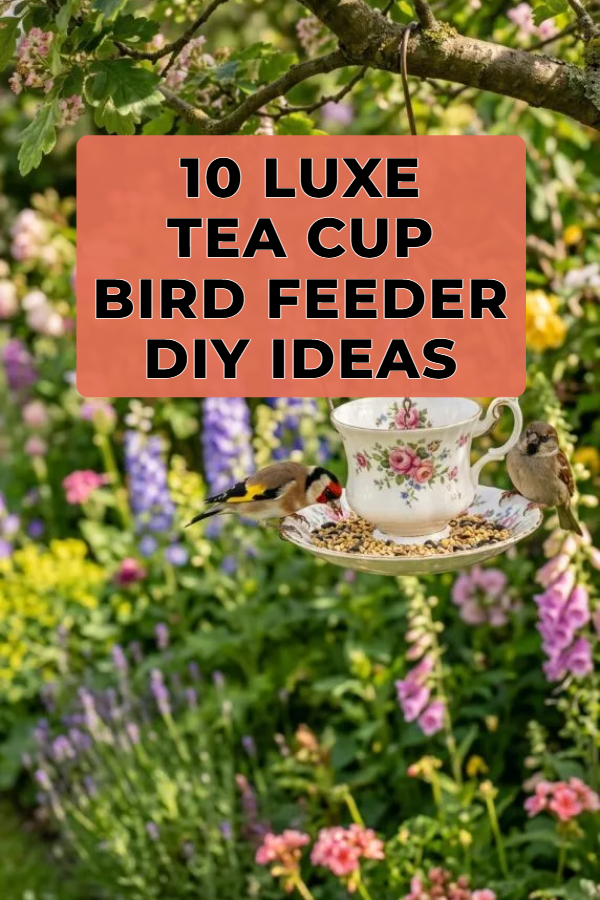
Tea cup bird feeders combine vintage charm with practical garden decoration, making them one of the most popular Pinterest ideas for outdoor DIY projects. These creative feeders transform unused teacups and saucers into welcoming feeding stations that attract a variety of backyard birds while adding personality to patios, balconies, gardens, and outdoor sitting areas. They are simple to build, beginner friendly, and require only basic materials, making them accessible for almost anyone interested in handmade home decor. Throughout this tutorial, you will learn how to plan your project, prepare your materials, and create ten unique tea cup bird feeder designs that balance function with aesthetic appeal. Whether your goal is to decorate a flower garden or encourage local wildlife to visit your outdoor space, these creative ideas offer practical inspiration for building attractive feeders that are both durable and visually appealing.
Why Tea Cup Bird Feeders Are Trending
Tea cup bird feeders continue to gain popularity because they combine sustainability, creativity, and decorative value in one easy project. Instead of discarding mismatched or vintage china, many people repurpose these pieces into attractive outdoor decorations that serve a useful purpose. Pinterest inspiration often highlights projects that blend handmade craftsmanship with everyday functionality, making tea cup feeders an excellent choice for gardeners and DIY enthusiasts alike. Their compact size also makes them suitable for small balconies, patios, and large landscapes without requiring advanced woodworking or expensive tools. Because each cup has its own pattern, shape, and color, every finished feeder becomes unique while remaining affordable. This combination of budget ideas, minimalist style, and practical decoration explains why these feeders continue to appear among today’s trending ideas for outdoor creative projects.
Materials and Preparation
Gathering quality materials before starting helps ensure a successful project with long-lasting results. Select a sturdy ceramic tea cup and matching saucer without major cracks or chips. Waterproof outdoor adhesive or epoxy is essential for securing the cup firmly to the saucer, while twine, metal chain, or decorative rope can be used if creating a hanging version. Bird seed, cleaning supplies, sandpaper for smoothing rough edges if necessary, and weather-resistant hooks or poles may also be required depending on your design. Before assembly, thoroughly wash and dry every piece to remove dust and grease that could weaken the adhesive. Plan where the feeder will be displayed by considering sunlight, shelter from heavy rain, and visibility for local birds. Proper preparation creates a stable, attractive feeder that remains safe throughout different weather conditions.
Rustic Garden Tea Cup Feeder
How to Create
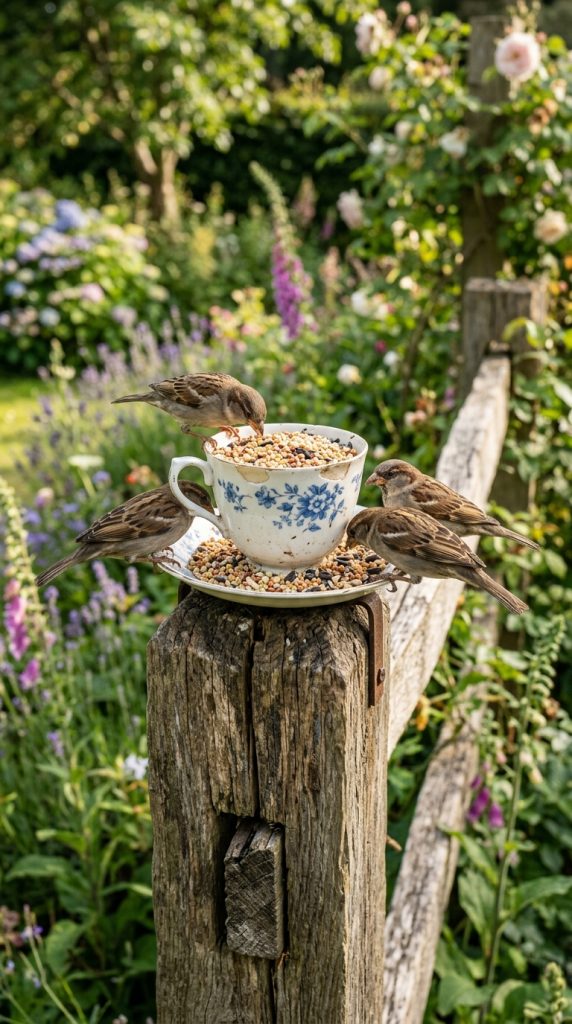
A rustic garden tea cup feeder creates a timeless appearance that blends naturally with flowers, shrubs, and wooden garden features. Begin by attaching the tea cup sideways onto the matching saucer using waterproof outdoor adhesive so the opening slightly faces upward. Allow the adhesive to cure fully according to the manufacturer’s instructions before moving the feeder. Fill the cup with bird seed while allowing extra seed to rest on the saucer, giving birds multiple feeding surfaces. Position the finished feeder on a wooden fence post, tree stump, or decorative garden pedestal surrounded by native plants that provide shelter for visiting birds. Soft earth tones, floral china patterns, and weathered finishes enhance the rustic atmosphere without overwhelming the landscape. This beginner friendly DIY project requires minimal planning while producing a beautiful handmade decoration that complements traditional garden design throughout every season.
Hanging Floral Tea Cup Feeder
Step-by-Step Guide
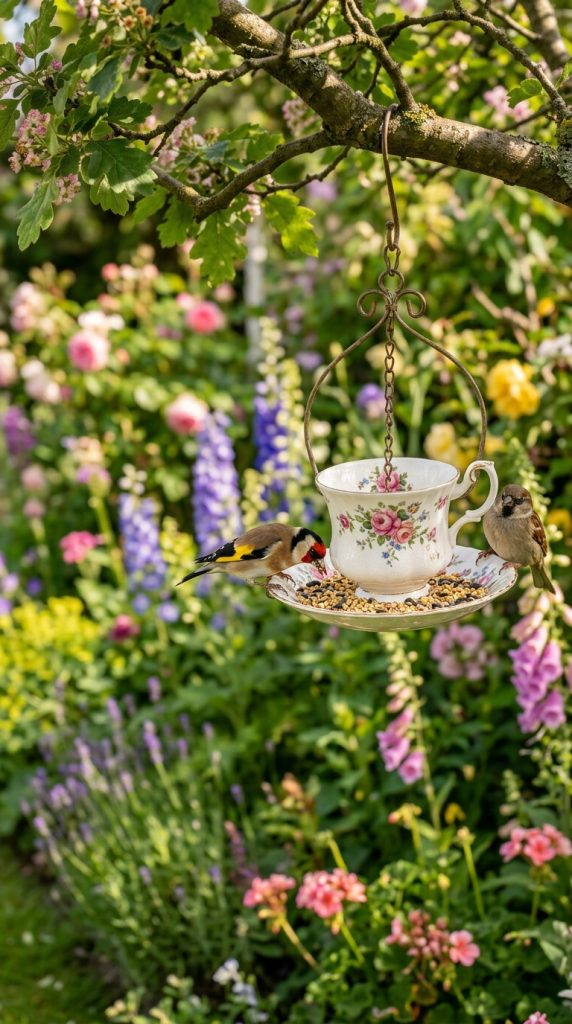
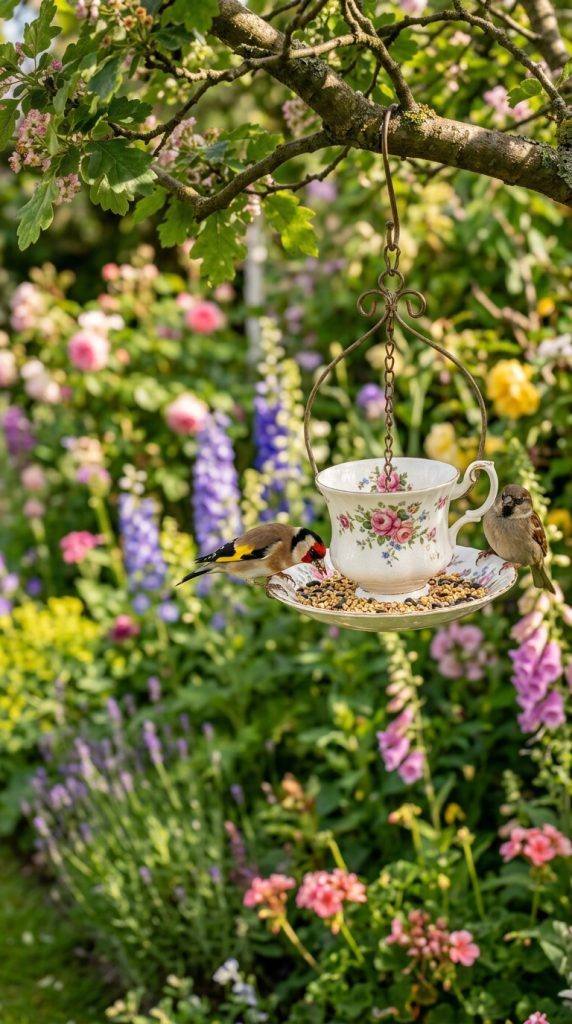
A hanging tea cup feeder introduces movement and elegance to outdoor spaces while saving ground space in compact gardens. Secure the tea cup firmly to its saucer before attaching three evenly spaced lengths of strong chain or weather-resistant rope around the saucer. Join the supports at a central hanging ring and suspend the feeder from a sturdy tree branch, pergola, or garden hook. Choose floral-patterned china to emphasize a soft cottage aesthetic that blends naturally with flowering plants and climbing vines. Keep the feeder level so bird seed remains evenly distributed inside both the cup and saucer. Hanging feeders should remain high enough to discourage ground pests while still allowing easy refilling and cleaning. Regular inspection of the suspension hardware ensures continued safety, making this attractive project both decorative and practical for long-term outdoor use.
Minimalist White Tea Cup Bird Feeder
How to Make
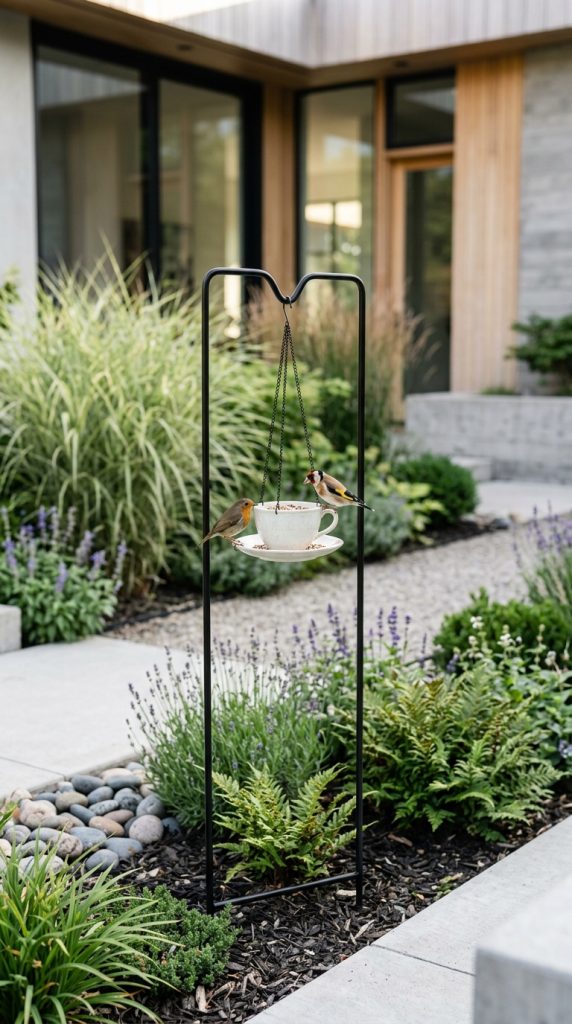
A minimalist tea cup feeder focuses on clean lines, neutral colors, and simple presentation that suits modern design preferences. Select a plain white ceramic tea cup and matching saucer without decorative patterns to create an understated appearance. Position the cup at a gentle angle on the saucer using durable waterproof adhesive and allow it to cure completely. Install the finished feeder on a sleek black metal stand or place it atop a simple concrete garden pedestal. The uncluttered design allows colorful birds and natural surroundings to become the visual highlight rather than the feeder itself. Fill the cup with quality bird seed while keeping the surrounding area tidy for an organized presentation. This easy project demonstrates that handmade garden decoration does not require elaborate details to achieve a sophisticated aesthetic suitable for contemporary outdoor spaces.
Vintage Stack Display Feeder
Execution Process
Transform multiple vintage china pieces into an elegant stacked bird feeder that serves as both sculpture and feeding station. Begin with a large plate or sturdy saucer as the base before adding decorative cups, saucers, and small bowls vertically using weatherproof adhesive. Reserve the upper tea cup as the primary feeding area while allowing lower plates to catch scattered seed. Select coordinating vintage patterns to create visual harmony while maintaining the character of each individual piece. Place the completed structure in a flower bed or near a garden path where visitors can admire its craftsmanship. Careful spacing between stacked elements creates balance while giving birds convenient perching locations. This creative project combines repurposed materials with decorative organization, producing a distinctive garden centerpiece that reflects classic style while encouraging wildlife to visit regularly.
Colorful Mosaic Accent Feeder
How to Create
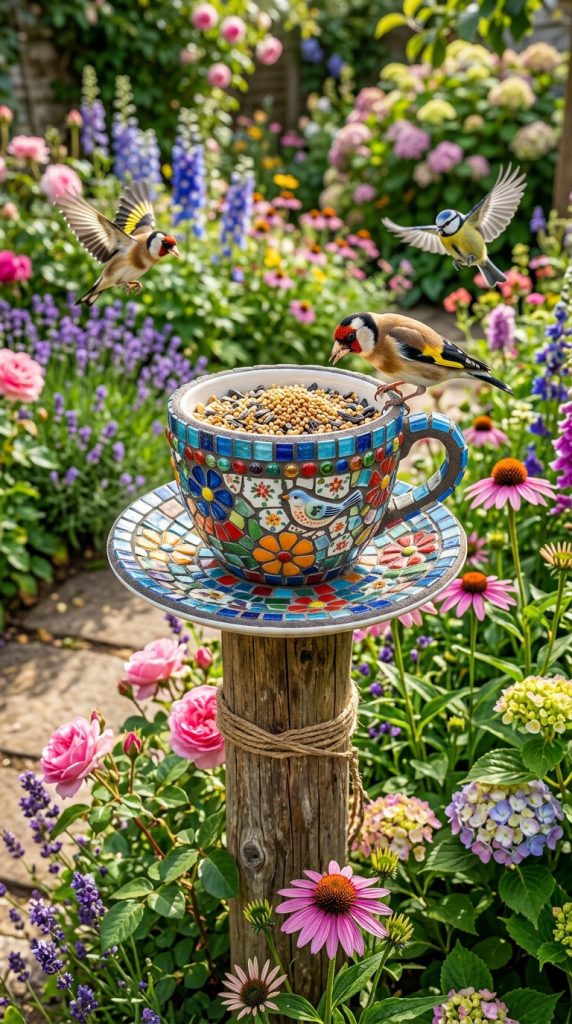
Add artistic personality to a simple tea cup feeder by incorporating colorful mosaic details around the saucer and outer cup surface. After assembling the feeder, attach small ceramic tiles, polished glass pieces, or decorative stones using outdoor mosaic adhesive. Leave the interior feeding area smooth for easy cleaning while concentrating decorative elements around the exterior. Choose complementary colors that coordinate with surrounding flowers or patio furniture to create a cohesive outdoor aesthetic. Once the adhesive dries, apply weather-resistant grout and sealant suitable for exterior use. Position the feeder where sunlight can highlight the mosaic textures without causing excessive heat. This step by step project introduces creative ideas for personalizing an ordinary feeder while maintaining functionality, making it an enjoyable DIY tutorial for gardeners who appreciate handcrafted artistic decoration.
Pole-Mounted Garden Feeder
Setup Method
A pole-mounted tea cup feeder offers excellent stability while keeping bird seed away from ground moisture and insects. Attach the assembled tea cup and saucer securely to a flat wooden platform or metal mounting bracket that fits onto a garden pole. Install the pole firmly into the soil using appropriate anchors for long-term support. Position the feeder near shrubs or small trees so birds have nearby shelter without placing it directly beneath heavy branches where falling debris may contaminate the seed. Regularly remove old seed and wipe the ceramic surfaces to maintain cleanliness. Decorative painted poles or natural wood finishes complement different landscape styles while preserving the feeder’s visual appeal. This practical design combines organization, durability, and accessibility, making maintenance easier while creating an attractive focal point within the garden.
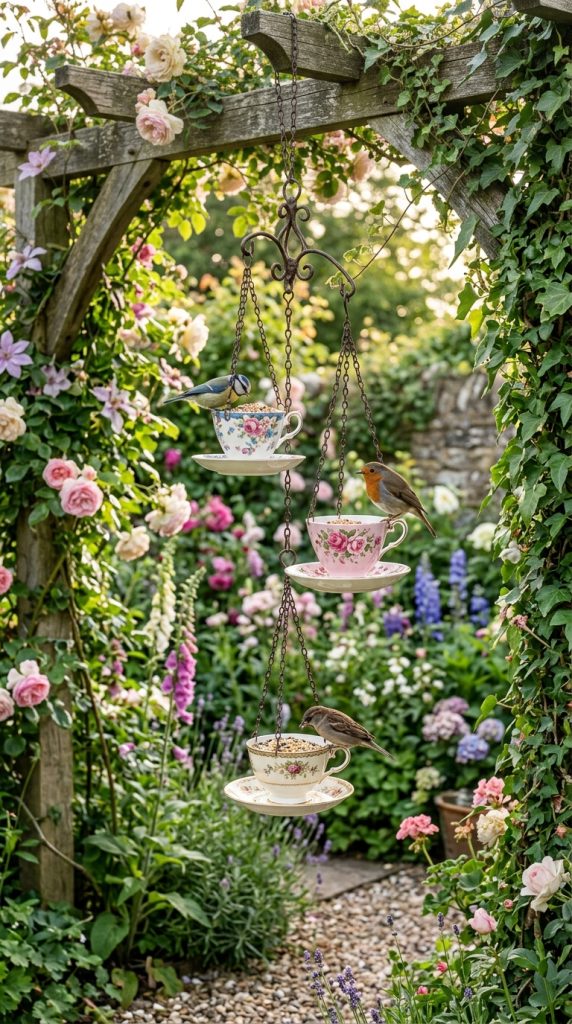
Cottage Garden Hanging Cluster
How to Make
Instead of displaying a single feeder, create a charming cluster using three or more matching tea cup bird feeders suspended at varying heights. Assemble each feeder individually before hanging them from a decorative metal stand or strong tree branch using equal-length chains. Mixing floral china with soft pastel colors creates a welcoming cottage garden atmosphere that photographs beautifully for Pinterest inspiration. Maintain enough spacing between feeders so birds can feed comfortably without crowding. Plant lavender, daisies, or other pollinator-friendly flowers nearby to encourage additional wildlife activity throughout the season. The grouped arrangement creates visual depth while increasing feeding capacity for multiple bird species. This beginner friendly project transforms a simple concept into an eye-catching outdoor display that combines practical bird care with elegant handmade decoration.
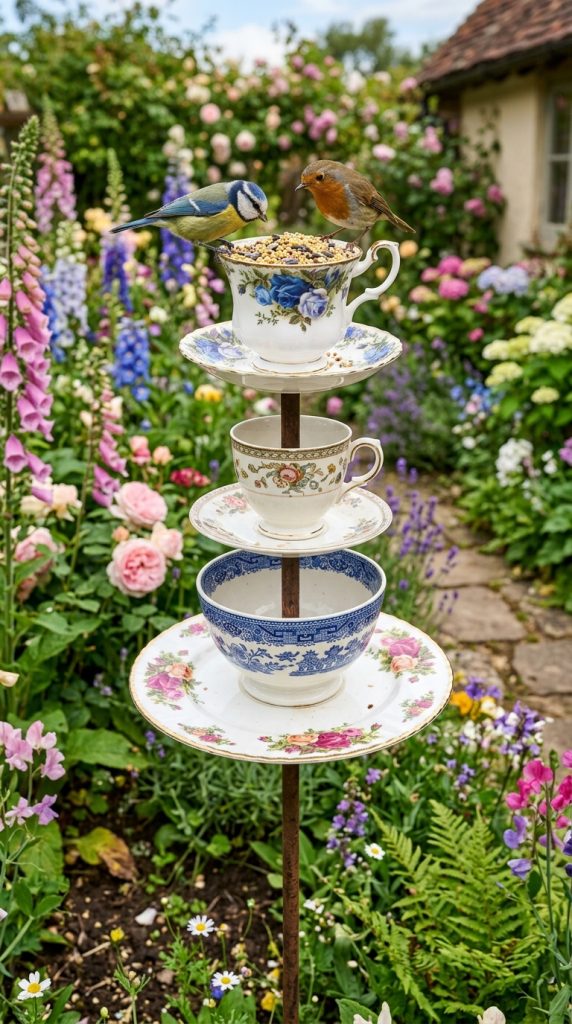
Seasonal Decorative Tea Cup Feeder
Step-by-Step Guide
Seasonal decorating allows one tea cup feeder to remain fresh and visually interesting throughout the year without rebuilding the entire project. Start with a sturdy neutral feeder, then update the surrounding presentation using natural seasonal decorations. During spring, surround the feeder with fresh flowers and greenery. Summer displays can include colorful garden blooms, while autumn arrangements benefit from miniature pumpkins, pinecones, and dried grasses. Winter styling works well with evergreen branches and weather-safe decorative berries placed around the feeder rather than inside it. Keep all decorations away from the feeding surface so birds have unobstructed access to the seed. Refresh seasonal accents as weather conditions change while maintaining regular cleaning. This creative approach provides endless inspiration for adapting one easy project into year-round garden decoration.
Recycled Mismatched China Feeder
How to Create
Repurposing mismatched china is an environmentally responsible way to create a unique tea cup bird feeder filled with personality. Select cups and saucers that differ slightly in pattern, shape, or color while maintaining a pleasing visual balance. Secure the pieces together with waterproof adhesive and inspect the finished assembly carefully for stability before outdoor installation. Rather than hiding imperfections, celebrate the distinctive character created by combining different vintage pieces into one functional design. Place the feeder among flowering plants or vegetable gardens where its eclectic appearance adds interest without dominating the landscape. Regular maintenance includes removing damp seed and gently washing ceramic surfaces with mild soap and water. This DIY tutorial demonstrates how recycled materials can become attractive outdoor features while reducing waste and encouraging creative thinking.
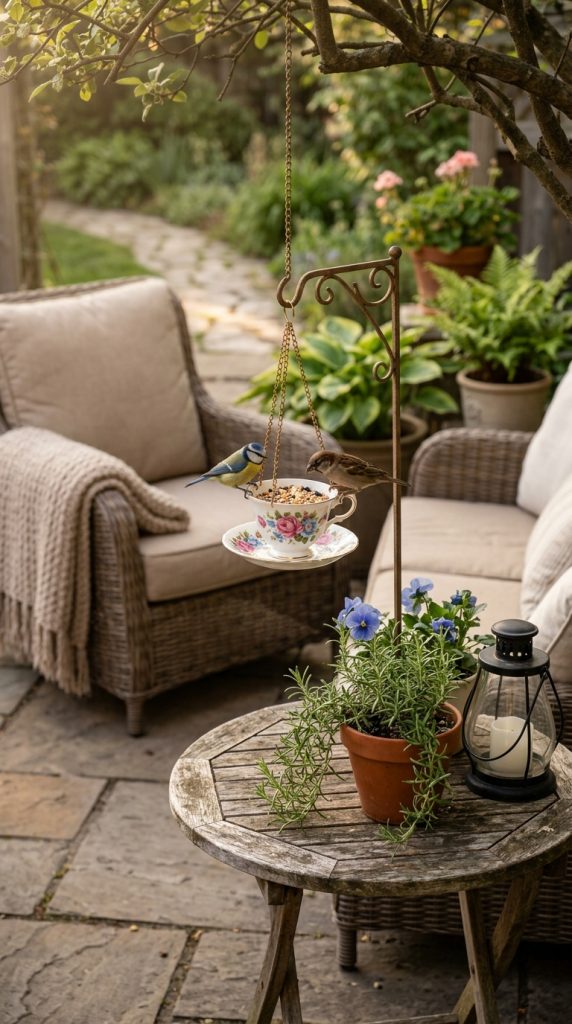
Decorative Patio Table Feeder
Execution Process
A decorative patio feeder allows bird watching from comfortable outdoor seating areas while contributing to the overall design of the space. Assemble the tea cup and saucer securely before placing the feeder on a weather-resistant pedestal or decorative outdoor table specifically designated for wildlife. Keep the feeding station several feet away from primary dining areas to maintain cleanliness while still providing enjoyable viewing opportunities. Coordinate the tea cup colors with surrounding cushions, planters, or garden accessories for a harmonious aesthetic. Refill seed regularly and remove empty hulls to prevent buildup that may discourage birds from returning. Positioning the feeder where morning sunlight provides gentle warmth encourages frequent visits while avoiding prolonged afternoon heat. This practical project successfully combines home decor, organization, and nature appreciation into a functional outdoor feature suitable for patios of many sizes.
Common Beginner Mistakes and How to Avoid Them
Many first-time builders focus only on appearance without considering long-term durability and bird safety. One common mistake is using indoor glue instead of waterproof outdoor adhesive, causing the cup to separate after exposure to rain and changing temperatures. Another issue involves placing feeders in overly exposed areas where strong winds easily spill bird seed or where predators can approach unnoticed. Filling the feeder excessively may also result in wasted seed that becomes wet and moldy. Beginners sometimes forget regular cleaning, allowing bacteria and old food to accumulate. Planning the installation carefully, using quality materials, selecting a sheltered yet visible location, and establishing a consistent cleaning routine significantly improve both the lifespan of the feeder and the health of visiting birds while preserving the attractive appearance of the finished creative project.
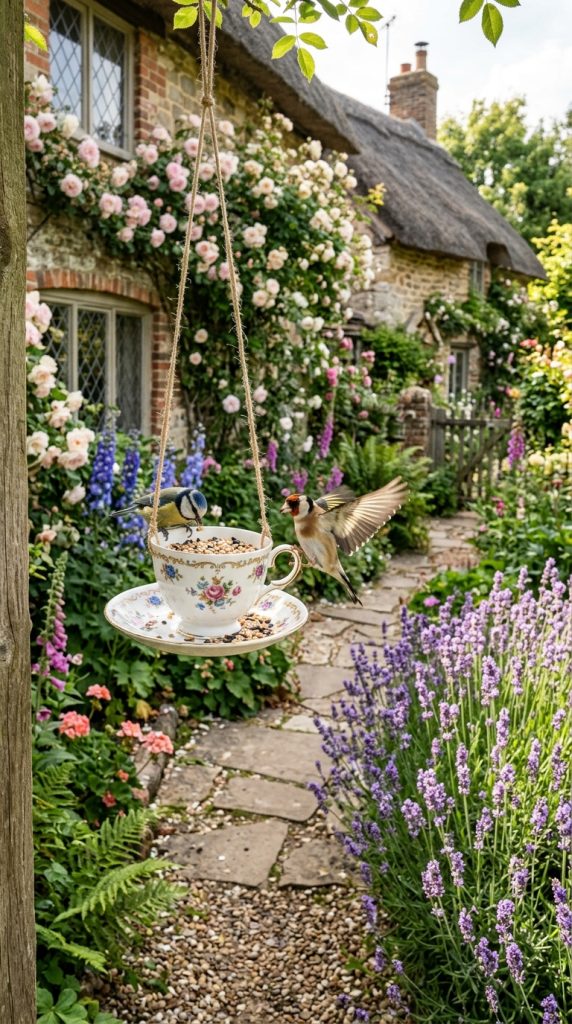
Practical Tips for Better Results
Small improvements can make a noticeable difference in both functionality and visual appeal. Always allow adhesives to cure completely before adding seed or moving the feeder outdoors, as premature handling weakens the bond. Choose ceramic pieces with thicker walls because they generally resist outdoor conditions better than delicate china. Position feeders near natural shelter while maintaining clear flight paths for birds approaching from different directions. Inspect hanging hardware regularly for wear, especially after storms or seasonal weather changes. Refresh bird seed frequently to maintain cleanliness and discourage moisture buildup. Matching the feeder style with nearby garden decoration creates a more cohesive landscape while improving Pinterest-worthy presentation. Consistent maintenance ensures that the feeder remains attractive, safe, and welcoming throughout every season without requiring extensive repairs.
Styling and Presentation Ideas
Thoughtful styling transforms a simple tea cup feeder into an attractive focal point within the garden. Coordinate colors with nearby flowers, planters, or outdoor furniture to create a balanced design that feels intentional rather than random. Decorative stones, wooden crates, small lanterns, and vintage watering cans provide complementary accents without distracting from the feeder itself. Grouping multiple feeders at different heights introduces visual variety while encouraging more bird activity. Surround the area with flowering plants that bloom during different seasons to maintain year-round interest. Natural textures such as wood, stone, and woven baskets pair especially well with ceramic china, creating a welcoming outdoor aesthetic. Careful organization of surrounding elements enhances the overall presentation while allowing the handmade feeder to remain the central decorative feature.
Budget and Time Planning
Tea cup bird feeders are among the most affordable outdoor DIY projects because many materials can be sourced from thrift stores, garage sales, or existing household collections. Repurposing unused china significantly reduces costs while adding vintage character that cannot easily be replicated with new materials. Most basic designs require only one tea cup, one saucer, waterproof adhesive, and bird seed, allowing the project to remain accessible for beginners. Assembly usually takes less than an hour, although adhesive curing time should always be included when planning the schedule. More decorative versions featuring mosaics or stacked displays naturally require additional materials and extra drying periods. Preparing every component in advance helps streamline the process, making this an easy project that delivers impressive decorative results without demanding a large financial investment.
Creative Expansion and Advanced Inspiration
Once you become comfortable with basic tea cup feeders, there are many opportunities to expand your creative skills through increasingly detailed designs. Experiment with layered displays featuring multiple feeding stations, decorative garden poles, or handcrafted wooden bases that complement the ceramic elements. Incorporate natural materials such as driftwood, reclaimed branches, or smooth river stones to create distinctive combinations of texture and color. Designing coordinated sets for different garden zones also introduces greater visual organization while encouraging birds to explore multiple areas. Seasonal updates, customized color palettes, and artistic mosaic details provide endless inspiration for refreshing existing feeders instead of replacing them. These advanced creative ideas allow experienced DIY enthusiasts to develop unique handmade garden decorations that remain functional while showcasing personal style and thoughtful outdoor planning.